19/05/2008

Beddome's Catechism

A review of the modern reprint of the catechism appears here at Discerning Reader. It says
 
Benjamin Beddome (1717-1795), an English Baptist minister and hymnist, wrote A Scriptural Exposition of the Baptist Catechism in order assist families and Bible teachers in laying out the textual foundation of the Baptist catechism. Whereas catechisms normally have the Bible references listed, Beddome prints out a phrase or clause from the referred text.
More than that though, he fleshes out the catechism question itself. The extra questions that explain the original catechism question are not few in number. The best way to explain this is to print out one of the questions and corresponding Beddome questions and textual assistance:

Question 1. Who is the first and chiefest Being?
Answer. God is the first and chiefest Being.
Is God the first of all beings? Yes. ‘I am the first,’ Isaiah 44:6.
Is he the first cause of all beings? Yes. Of whom are all things, 1 Corinthians 8:6.
Are all other causes subordinate to the first cause? Yes. O Assyrian, the rod of mine anger and the staff in their hands is mine indignation, Isaiah 10:5
Is God the first in creation? Yes. He spake and it was done, Psalm 33:9.
Is he the first in providence? Yes. For in him we live, and move, and have our being, Acts 17:8.
Is he the first in government? Yes. Thy throne is established of old, Psalm 93:2.
Is he the first in the world of grace? Yes. All things are of God, who hath reconciled us to himself.
2 Corinthians 5:18.
Is he first in the displays of his love? Yes. We love him because he first loved us. 1 John 4:19.
Can we be beforehand with God? No. Who hath first given unto him, and it shall be recompensed unto him again. Romans 11:35.

Now, just to be clear, the above “further questions” that I took the time to type out here represent only nine of about twenty-five of the questions that Beddome came up with to explain the very first question of the catechism.
Therefore, you can see what you are getting in this book – a full supplemental aid to understanding the catechism. Additionally, there is a nine-page biography of Beddome written by SBTS professor Michael Haykin, an introduction to the text by James Renihan, and a textual index that may have been prepared for this particular edition.
So far, my only complaint is that some of the Scripture texts Beddome uses in his explanation leave me scratching my head wondering how they relate to the actual point being made.
This book has already found use at home with my sons, but I can also see it being put into use in a church class studying doctrine. And as always, I appreciate the dark ink and bright paper that characterizes the Solid Ground Christian Book reprints.

12/05/2008

Sermon c 147 The faithfulness of the divine being

1 Thessalonians 5:24 Faithful is he that calleth you, who also will do it.
Under all our despondencies it is good to be looking unto God. We should not say, This enemy is too mighty, I cannot resist him; this duty is too difficult, I cannot perform it; this trial or affliction is too heavy, I cannot sustain it. We should not so much think what we cannot do, as what God can and will do. "Trust in the Lord for ever, for in the Lord Jehovah is everlasting strength." This holy confidence the apostle would inspire in the Thessalonian believers, when he says, "Faithful is he that calleth you, who also will do it." Here we may notice, first, that concerning which the apostle expresses his assurance; and, second, the grounds of that assurance. First, that concerning which the apostle expresses his assurance: "Who also will do it." "My Father worketh hitherto," says Christ. God is ever doing; and if he were not, we should be for ever undone. Now this may refer,
1. To the blessings just before prayed for, which are two: (1) Sanctification. "The God of Peace," says the apostle, "sanctify you wholly." This God claims as his prerogative; "I am the Lord which sanctifieth you." His people, sensible that their own efforts, and all external means, without his blessing, will be ineffectual, apply to him for it. (2) Preservation. God sanctifies those whom he will preserve, and preserves those whom he has sanctified; preserves from enemies, and from falling entirely, through the wilderness to the heavenly Canaan. The inheritance is kept for them, and they are kept for the inheritance.
2. To the duties before enjoined. Is it our duty to "rejoice evermore," to "pray without ceasing," "in every thing to give thanks," and the like? Well may we say, "Who is sufficient for these things?" What difficulties attend the discharge of one of these duties; how much more of them all! To animate us, therefore, and prevent those discouraging thoughts, which would otherwise arise in our minds, it is good to remember that it is God who must and who doth work in us " both to will and to do of his own good pleasure." It is necessary that he should do it; it is certain that he will. Without him we can do nothing; by his assistance we can do every thing. We can only act by being acted upon. His omnipotency will be a sufficient remedy for our impotency. Hence, it was a saying of one of the ancient fathers, "Lord, give thou what thou commandest, and then command what thou wilt." "The Lord is faithful," says the apostle in his second epistle to the Thessalonians, "who shall stablish and keep you from evil:" and then he expresses his confidence that they did, and would do, the things that were commanded them.
3. This may be applied to any other good thing necessary to be done either by God for us, or by us for God. "My God," says the apostle, "shall supply all your need, according to his riches in glory by Christ Jesus." In my text there is something very beautiful. The apostle says, God will do it - without saying what; so that, whatever we can conceive of as needful for us, and conducive to his honour, he will perform. Dost thou want, O soul! to have thy sins pardoned, that dreadful weight of guilt removed, which almost sinks thee into despair? Dost thou want to have thy corruptions mortified, which create so much uneasiness to thyself, and, by breaking forth into. actual sins, have brought so much dishonour to God? Dost thou want to walk in a humble nearness to God, to have freedom of access to him now, and to appear before him with holy confidence at last? Dost thou want to be sincere, spiritual, and useful - to have all thy fears suppressed, all thine enemies trod under thy feet - to live in peace, and die in triumph, and then brought safe to heaven ? Then, "wait upon the Lord, and keep his way." Faithful is he that calleth thee, who will do it. Something like this is that request of the Psalmist, " Do thou for me, O God, the Lord, that which is fitting."
I proceed, secondly, to consider the grounds of the assurance here expressed. And as the temple of old had two pillars, Jachin and Boaz, both which signify strength and power, to support it; so the apostle's confidence in my text rests upon a twofold foundation, the faithfulness of God, and the good work that he has wrought in the hearts of his people; and if these foundations were to fail, well may we say, what would the righteous do?
1. The first foundation, then, is the immutable faithfulness of God.
Not the Christian's faithfulness to God, but God's faithfulness to him .... The Christian, therefore, even in the greatest affliction, may draw comfortable conclusions from the faithfulness of God. Thou, O Christian, art deceitful, and changing as the wind; but God is faithful! Thou canst not trust thyself, but canst thou not trust God? Cast all thy burdens, throw the whole weight of thy concerns upon him, and the event will be honourable to himself, and happy to thee. What he hath promised he will do, for he cannot violate his engagements or break his word. The promise and oath of God are those two immutable things, whereby God affords strong consolation to all true believers; but neither the one nor the other would be a solid ground of comfort, were it not for his own inviolable faithfulness and
2. The other foundation is the good work that God mightily wrought in the hearts of his people. We have a similar passage 1 Cor 1:9. (1) This may refer to that effectual calling whereby we are brought out of darkness into light, and from under the power of Satan into the kingdom of God's dear Son.
(2) It may also refer to those calls which are consequent upon the former. You may observe, that it is not said in my text, "Who hath called you," but, "who calleth you;" or, as it might be rendered, "who is now calling you." As the saints have need to be continually calling upon God, so they have equal need to be continually called by him; so that it may be said of calling, as one said of conversion, " If I have been converted once, I have been converted a hundred times over."
Upon these remarks we may found the following inferences. 1. Whatever we do for God should be looked upon as the fruit of what he does for us, and therefore we have no reason to be proud of our best performances. 2. The great thing necessary to internal sanctification and all practical religion is our calling of God. Here God's work begins and here begins our working for God. 3. While saints rejoice let sinners tremble at God's faithfulness. As God is faithful to his promises so is he also to his threatenings. He is as unchangeable in his wrath as in his mercy.
NB Beddome's sermons on 1 Thessalonians 5:16-22 (seven sermons) appear in Volume 4 of his short discourses or village sermons.

05/05/2008

Sermon c 146 Special salvation of believers

1 Timothy 4:10 Who is the Saviour of all men, specially of those that believe.
It was the angel's message to the wondering shepherds, "Unto you is born this day, in the city of David, a Saviour, which is Christ, the Lord." And what a Saviour Christ is we are told in the words of my text. He is the Saviour of all men, but not in the same sense or manner, for he is specially so of them that believe. Here it may be proper to show, in what sense Christ, or rather, God in Christ, is the Saviour of all men; in what more special sense he is the Saviour of true believers; and then take notice of the superior excellency of this manifestation of his character to the former.
1. I am to show in what sense Christ, or God in Christ, is the Saviour of all men.
1. He saves the whole world, and all the numerous inhabitants of it, from immediate ruin and destruction. As he formed at first, so he, to this day, upholds all things by the word of his power. He preserves all creatures in being, and causes the earth to bring forth its precious fruits for their support and nourishment; and this his goodness extends to his most bitter and irreclaimable enemies, causing his sun to shine upon the just and the unjust, the thankful and the unthankful. 2. He saves kingdoms and societies of men from those desolating judgments which would otherwise fall upon them; and often distinguishes one nation from another by acts of goodness, and the exertions of his Almighty power. ... Next to the children of Israel, perhaps there is no nation that has realised greater or more repeated instances of God's providential goodness and care than our own. Witness the early introduction of the gospel, the happy reformation from Popery, the settlement of the present Royal Family on the throne and the many remarkable interpositions in our favour, when we were apparently on the brink of ruin. Happy art thou, O Britain! "Who is like unto thee, O people, saved by the Lord, who is the shield of thy help, and the sword of thine excellency!" 3. He saves particular persons from threatening dangers and extricates them from those afflictions which would be too heavy for them to bear. His providence extends not only to the great and momentous concerns of states and kingdoms, but to the less imposing affairs of private life.
I proceed,
2. To show in what more special sense God in Christ is the Saviour of true believers ; and this may refer either to the conduct of his providence, or the displays of his grace. 1. To the conduct of his providence. Many good things do others receive from the hand of God; but with these good things the saints have also his good will, which good will sweetens all their comforts, and sanctifies all their afflictions; turns their afflictions into blessings, and makes their blessings, blessings indeed! ... There is a general providence which attends all mankind, denoted in those words, " The eyes of the Lord are in every place, beholding the evil and the good" (Prov 15:3): but there is a particular providence that watches over God's people; and therefore it is said, "He withdraweth not his eyes from the righteous." (Job 36:7) 2. To the display of his grace. Others may meet with temporal deliverances, but believers shall be saved with an everlasting salvation, not only from the common calamities of life, but from the curse of the law, the reigning and condemning power of sin, the wrath of God, the tyranny of Satan, and the torments of hell. Christ is to his people a powerful and complete Saviour: He is able to save to the utmost, and he will save to the utmost, - to the utmost of their wants and desires, to the utmost extent of time, nay, through an endless eternity, - all those who put their trust in him. 3. I am to take notice of the superior excellency of this manifestation of the divine character to the former; and the three following things appear to be intimated by the manner in which the Apostle here expresses himself. - That the salvation of believers is more extensive. Other deliverances extend only to the body or outward estate, but this extends to the whole man, and involves both body and soul, but especially the latter. - As it is more extensive, so it is more important. What are all temporal deliverances compared with the salvation of an immortal soul? Hence it is called, "so great salvation" (Heb 2:3).3. It is not only more extensive and important, but also more durable. "My salvation," says God, "shall be for ever," (Isa 51:6) It shall outlast heaven and earth; it is the fruit of an everlasting decree, founded upon an everlasting righteousness, and wrought out by one who is "the same yesterday, to-day, and for ever." Again, "Israel shall be saved with an everlasting salvation." "Ye shall not be ashamed or confounded, world without end," (Isa 45:7). As this salvation will infinitely exceed all our hopes, so it will be as permanent as our beings. There will be no end of the misery of the wicked, no end of the happiness of the saints. Their present possessions may be ravished from them by fraud or violence, but their future inheritance is secured from all hostile attempts; it is a city with foundations, a kingdom that cannot be shaken. Now, as Dr Young observes, - "A perpetuity of bliss is bliss;" eternity crowns and consummates felicity. Earthly pleasures are short, but the pleasures of God's right hand are for evermore; the joys of heaven, and torments of hell, are both everlasting. This should lead us to inquire, Are we believers? That question which Christ put to the man who had been born blind, I would put to each of you: "Dost thou believe on the Son of God?" Your eternal salvation is involved in the decision of this question; for, " He that believeth, hath everlasting life;" hath the first-fruits and earnest of it: "he that believeth not, shall not see life, but the wrath of God abideth on him." This is the great thing that will be inquired about at the last day; and, therefore, it is the great thing we should inquire about now. Finally, what reason have believers to admire and adore the discriminating grace of God! for He who is the Saviour of all men, is specially so of them that believe.

02/05/2008

Belcher on Beddome

The prolific Baptist author Joseph Belcher (1794-1859), who spent the last 15 years of his life in America, wrote his last book in 1859. It was a book of Historical Sketches of Hymns, their writers and their influence. On Beddome he says
 
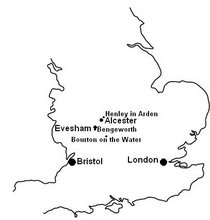
Most of our hymn-books contain a large number of compositions by the Rev Benjamin Beddome, a man of considerable talents and high attainments, but who spent the far greater portion of a long life in the seclusion of a small country village. He was the son of a Baptist minister, was called by divine grace at the age of 20, and baptised by the Rev Samuel Wilson, of London, about two years afterward. He visited Bourton-on-the-Water in 1743, and was prevailed on to accept a call to the pastorate, three years afterward. In 1749 he suffered a very severe illness, and on his recovery wrote a hymn which he afterward replaced by one commencing, — "If I must die, oh, let me die Trusting in Jesus' blood,— That blood which hath atonement made And reconciles to God."
Not long after his recovery he was earnestly entreated to succeed Mr Wilson, his pastor in London. So determined were this church to obtain him that, after sending call after call in vain, they deputed one of their number to urge the matter with him. This was discovered by a poor man, a member of his church, to whom the care of the gentleman's horse had been intrusted; and having, with excited feelings, brought the horse to Mr Beddome's door, the poor man said to the Londoner, "Robbers of churches are the worst of robbers," and at once set the horse free to take his own course. Mr Beddome's final reply was, "I would rather honour God in a station even much inferior to that in which he has placed me, than intrude myself into a higher without his direction," and remained in his pastorate at Bourton till his death. ...
 
Belcher then speaks of Beddome's attachment to Bourton and quotes from 'The wish'. He says that in 1749 he married 'an excellent young lady, daughter of one of his deacons, who was for 34 years his beloved companion.' He concludes
 
... Mr Beddome's ministrations retained to the very last all their liveliness and attractions, improved by the increased solemnity and wisdom of age. His earnest desire that he might not be long laid aside from his beloved employment was fully gratified; for, having during his infirmities been carried to the house of God, he preached sitting, and was only confined to his house one Lord's day. Only an hour before his death he was found composing a hymn, of which he wrote,
 
God of my life and of my choice,
Shall I no longer hear thy voice?
Oh, let the Source of joy divine
With rapture fill this heart of mine.
 
Thou openedst Jonah's prison-doors, —
Be pleased, O Lord, to open ours:
Then will we to the world proclaim
The various honours of thy name.
This excellent man fell asleep in Jesus, September 3, 1795, in the 79th year of his age, having laboured at Bourton 52 years. In the year 1818 a volume of his hymns was published, with a short but beautiful preface by the late eloquent Robert Hall, who says, "The man of taste will be gratified with the beautiful and original thoughts which many of them exhibit, while the experimental Christian will often perceive the most sweet movements of his soul strikingly delineated, and sentiments portrayed which will find their echo in every heart."

The men God uses

In 2004 the Founders Journal carried an article on The kind of men God uses surveying some early Baptist voices by Bill Moore. (See here). He refers to Beddome as below:
Benjamin Beddome also noted “the precariousness and uncertainty of success,” and yet such uncertainty was not to diminish the intensity of the labour. Beddome wrote, “‘We have toiled all the night,’ say the disciples, ‘and caught nothing;’ and thus may ministers do, nay, many nights and days; but one happy draught, at last, will be a sufficient recompense for all their labour.” Beddome noted that “sometimes the gospel makes astonishing progress,” but such a harvest is not usual. “In general, ministers fish as with an angling rod, and it is but now and then that they win a soul to Christ.” He maintained that “the most faithful and zealous, the most skilful and industrious, are not always the most useful.” Continuing the fishing analogy, he illustrated, “The net or hook sometimes breaks, and the fish which seemed to be caught makes its escape; and thus it is in fishing for souls.”
He applied the illustration to contemporary ministry: “Convictions are lost and impressions wear off, hopeful prospects vanish,and those who seemed to have escaped the pollutions that are in the world, through the knowledge of the Lord and Saviour Jesus Christ, return like the dog to his vomit, and the sow that was washed to her wallowing in the mire.” [*]
Ministers were required to exercise faithfulness: God would take care of the outward success.
* Benjamin Beddome, Sermons Printed from the Manuscripts of the Late Rev. Benjamin Beddome, A.M. of Bourton-on-the-Water, Gloucestershire (London: William Ball, 1885), 305. Similarly, in a charge delivered in 1796 at the ordination of W Belsher in Worcester, John Ryland maintained, “We cannot ensure the fruit of our labours, but he can do it infallibly; and he will accept, and reward, those whom he makes faithful, whether their success equal their expectations, or not.” John Ryland and S. Pearce, The Duty of Ministers to be nursing Fathers to the Church; and the Duty of Churches to regard Ministers as the Gift of Christ (np, 1797), 33.