23/06/2008

Sermon c 62 Lift up thy prayer

Isaiah 37:4 Lift up thy prayer for the remnant that is left
Hezekiah being both distressed and alarmed at the invasion of his land by Sennacherib, King of Assyria, sends some of his chief officers to the prophet Isaiah, entreating him to use his interest in the court of heaven, in behalf of himself and his afflicted people; hoping that God would be prevailed upon to scatter the gathering clouds; or if not, it would afford some satisfaction that they had not been wanting in their application to him. If prayer be answered, the blessing coming in that way will be doubly sweet; but if not, prayer itself affords some relief. The possibility of acceptance and success is a sufficient motive to the duty: Lift up therefore thy prayer for the remnant that is left.
1. The person who is to engage in the work of intercession, was one of great eminence in the church and commonwealth, a good and a great man, a prophet of the Lord, and one who was indulged with peculiar nearness to him. To such a one, prayer is not only a duty, but sidelight. Others ought to pra ; but he can pray, and cannot but pray. Persons of eminent piety will not be contented with ordinary applications to the throne of grace; they will seek till they find, and wrestle till they prevail. Therefore lift up thy prayer, oh man of God; for the prayer of the righteous availeth much. 2. Those for whom the prophet was requested to pray, were the remnant that was left; a certain number, known unto God, and who remained after the rest were scattered or destroyed. ... The prophet's making intercession for this remnant, if so it be understood, may teach us, that though in our prayers we should be forgetful of none, yet we are to be particularly mindful of our fellow christians, especially when in a state of adversity. They have also most need of our prayers ; for their enemies are more numerous, malignant, and powerful, than those of other people. 3. There is something observable as to the manner in which the prophet's intercession is requested: Lift up thy prayer said the messengers of the king, for the remnant that is left.
This expressive form of speech may teach us to remember
1. That the glorious object of prayer is infinitely exalted, sitting on a throne, high and lifted up, his train filling the temple. And though he condescends to hearken to our requests, he is still the high and the lofty One who inhabiteth eternity, and must be approached with reverence and godly fear. All our thoughts and conceptions are lost in the immensity of God, whose greatness is unsearchable. 2. The low and mean condition of the worshipper. We are to remember not only that God is in heaven, but that we are upon earth. We are less than nothing in his sight, and should be so in our own. Other particulars are also suggested by this impressive form of speech; such as (1) The secrecy of prayer, according to our Lord's direction: When thou prayest, enter into thy closet, and when thou hast shut the door, pray to thy Father which seeth in secret ; and thy Father which seeth in secret, shall reward thee openly. Lifting up a prayer may denote the same thing as David expresses, by the lifting up of the soul to God, in mental and silent ejaculation. This is the essence of prayer, without any of its external appendages. It is prayer before God, when there is no appearance of it before men. Such brief and tender embassies to heaven are likely to meet with little interruption, because they may be made before the corruptions of the heart have power to operate, or before the adversary can know the purpose for which they are employed. Containing also an implicit acknowledgment of the divine omniscience, and of our absolute dependence upon God, these silent and momentary aspirations are highly pleasing in his sight. (2) The importunity and ardour of prayer, may be denoted by this expression. In lifting up our prayer to God, our affections should rise high, though our voice may be low and feeble. God invites us to his throne, and we should labour to be in good earnest when we come thither. Thus Bartimeus, and thus the woman of Canaan prayed. In scripture, prayer is often expressed by crying, groaning, wrestling, labouring, striving; all which denote a holy importunity, or sacred violence. (3) The spirituality and heavenly-mindedness of the person engaged. There may be spirituality in prayer, where there is not that earnestness and vehemence which might be desired. Who would not wish to experience that humble, composed, and devotional frame of mind which David discovered, when he went in and sat before the Lord, recollected the mercies of his past life, and broke forth into that rapturous expression of gratitude and love? " Who am I, oh Lord God, and what is my father's house, that thou hast brought me hitherto!" (4) Boldness and confidence, accompanied with the hope of being heard and answered, is also a prerequisite to acceptable prayer. If any of you lack wisdom, says James, let him ask of God, who giveth to all men liberally, and upbraideth not; and it shall be given him. But let him ask in faith, nothing wavering; for he that wavereth is like a wave of the sea, driven with the wind and tossed: for let not that man think that he shall receive any thing of the Lord. (5) The expression in the text may denote the proper end of prayer, which is not to draw the divine Being near to us, but ourselves near to him; not that he may be moved, and induced to give, but that we may be suitably prepared to receive. He often waiteth to be gracious, because he is a God of judgment, abounding towards us in all wisdom and prudence. He sees that the desired good is either not good for us, or that it would be better to bestow it at some other time, or in some other way: but in any case he hath not said to the seed of Jacob, seek ye me in vain. The Lord is nigh unto all them that call upon him, to all that call upon him in truth: he will fulfil the desire of them that fear him: he also will hear their cry, and will save them. Ps 145:18, 19

Lord, let my prayer like incense rise,
Before thy throne above the skies;
And my requests accepted be,
Through Jesus pleading there for me.

When nought but troubles here I find,
Prayer relieves the anxious mind;
By it I cast my care on thee,
Who carest, and wilt care for me.

Thou sovereign Ruler of my heart,
Thy quick'ning grace to me impart;
If this denied, I prayer restrain,
Or pray remissly, and in vain.

This is an alternative version of Hymn 440 found in the book in this form

Lord, let my prayer like incense rise,
Before thy throne above the skies;
My breathings all accepted be,
Through Jesus pleading there for me.

When nought but troubles here I find,
And none to ease my burdened mind,
Oh may this thought the mountain move,
That I've an Advocate above.

Thou sovereign ruler of my heart,
Thy quickening grace to me impart,
That I no more may prayer restrain,
Or pray remissly and in vain.

20/06/2008

Sermon 61 Who is the beginning?

Colossians 1:18 ... who is the Beginning ...
Names and titles amongst men are generally insignificant, and are not characteristic of the persons to whom they are applied. But the titles given to Christ are always descriptive and recommendatory; denoting the peculiar excellencies of which he is possessed, and the invaluable blessings which he imparts. They either tend to illustrate the glory of his character as Mediator, or display his infinite and adorable perfections as God over all, and blessed for ever. 1. He is the beginning, as to his divine nature. He is here called the image of the invisible God; not an imperfect representation, as angels and saints may be; but as it is said in another place, he "is the express image of his person." He is personally distinct from the Father, but essentially the same; not only manifesting, but participating all his glories. 1. The pre-eminence that is here ascribed to Christ, implies his eternity and self-existence. He is not God by derivation, or by commission; but is really and properly so. He is before all things, and by him all things consist; he is therefore the beginning, and the fountain of all created existence. What he is as a divine person, that he ever was, and will never cease to be. He who is the first beginning and last end of all things, must himself be without beginning or end; and is the same yesterday, today, and for ever. The same in the perfections of his nature, and consequently in his claim to our regard. 2. The pre-eminence ascribed to him, implies that he is the fountain of life and existence to all creatures. He who received life from none, communicates life to all. ... He is the great origin of our being, and of all existence; universal nature owns him its sovereign and its head. Oh come, let us worship and bow down; let us kneel before the Lord our Maker. For he is our God, and we are the people of his pasture, and the sheep of his hand. Let us enter his courts with thanksgiving, and his gates with praise.
2. Christ is the beginning, considered as Mediator. He is the origin of the church of God; it is he that raises it out of the ruins of the fall. Had it not been for him, it would have had no existence. Is it a temple? He builds it, and is the foundation on which it rests. Is it a garden? He plants it, encloses and separates it from the wilderness, and makes it the object of his delight and care. He is also the beginning to individual saints. Our life is from his death, and all the streams of blessedness flow from his inexhaustible fullness. More particularly,
1. He is the source and origin of reconciliation, and the beginning of our peace with God. 2. Christ is the beginning, in reference to the change wrought in us by regenerating grace.
We may from hence learn 1. The honour that is due to Christ, of whom the whole family in heaven and earth is named. It was foretold that he should be great, and he is so. In all things he has the pre-eminence, and to him alone is the glory due. Oh how excellent is his name in all the earth; his glory is above the heavens! When God raised .him from the dead, he set him at his own right hand, far above all principality and power, and might, and dominion, and every name that is named, not only in this world, but also in that which is to come ; and hath put all things under his feet, and gave him to be the head over all things to the church, which is his body, the fullness of him that filleth all in all. 2. As Christ is the foundation and the beginning of all spiritual blessings, so these blessings can belong to none but such as are in him. Not one word of comfort is spoken in the scriptures, nor any blessing promised to unbelievers; they possess nothing that is worth possessing, and have a right to nothing that is worth enjoying. Those who are without Christ, are without holiness, and without hope. Salvation never comes to any house, or to any heart, till Christ is first received; and those who have him, shall inherit all things. 3. He who is the beginning is also the end ; and this secures the happiness of all the saints. He who has begun the good work, will complete it ; and he who is the author, will also be the finisher of faith. He has put his hand to the plow, and will not look back. He has loved his own which are in the world, and he will love them to the end. His hand has laid the foundation, and he will bring forth the top-stone with shoutings, - grace, grace unto it. "The Lord will perfect that which concerneth me: thy mercy, oh Lord, endureth for ever: forsake not the work of thine own hands - now unto him. who is able to keep us from falling, and to present us faultless before the presence of his glory with exceeding joy ; to the only wise God our Saviour, be glory and majesty, dominion and power, both now and ever. Amen."

19/06/2008

Hester quotes and Conclusion

Hester concludes by saying:
The following sentences are taken from the second volume of his sermons:
"Despondency clips the wings of desire, and cuts the sinews of exertion; but hope is a spur to activity, and an antidote against fainting."
"Diligence without dependence is folly and madness; dependence without diligence is presumption and arrogance."
"Guilt drives wicked men from God, but good men nearer to Him."
"We are not the less willing because we are made so in the day of His power. That which is an act of power with regard to the Holy Spirit, is a voluntary act with regard to the human will."
"The atonement of Christ was necessary for our pardon, and a continual application of it is necessary to our purity."
"Submission without conviction will neither bring honour to the preacher, nor profit to the hearer."
"Grace turns the serpent into a rod; but sin turns the rod into a serpent. The former turns poison into a remedy; but the latter turns the remedy into poison."
"Sinners on earth are always punished less, and in hell never more, than their iniquities deserve."
"The forbearance and long-suffering of God towards sinners is truly astonishing. He was longer destroying Jericho than in creating the world."
The following striking sayings are from a sermon on the text Therefore it is of faith that it might be by grace
"Faith gives no title to eternal life, but receives one; it constitutes no justifying righteousness, but it apprehends and applies that righteousness on account of which we are justified."
"Salvation is through faith, but not for it as if it were given in reward of believing."
"Faith has nothing to glory in, it is only the empty hand or the imploring eye"
"True faith places the crown on the head of him who ought to wear it. It does not fall in love with itself, but with the Saviour. It renounces all merits and worthiness, and seeks it in Him alone. It puts on the robe, but it did not weave it: it shows the debt paid, but did not discharge it."

We have quoted enough to show that Benjamin Beddome was no ordinary man. His sermons will richly repay perusal. It is impossible to rise from a careful reading of them without feeling a fresh glow of religious life in the heart. You feel that the preacher was thoroughly in earnest, and felt and believed what he said. Every sentence bears on it the stamp of genuineness. The conscience is appealed to, the judgement informed, affections aroused. The Gospel is not a lifeless system of stale doctrines, but a divine reality. adapted to meet all the wants of corrupt human nature. In dwelling on the lineaments of this beautiful character, we cannot but wish, that there may still be found in our churches, men who shall combine the masculine sense, the poetic beauty, the glowing piety, the fervid zeal, and the terse brevity, which were so eminently illustrated in the sermons and songs of Benjamin Beddome.

Hester on Beddome's preaching

In a further discussion of Beddome's sermons Hester refers to
... A colloquial criticism Robert Hall offered on these sermons, (where) he says

"They are very evangelical, and there is a good choice of subjects: there is a bone and sinew and marrow in them that shows a great mind. I like them, Sir, because they are so full of thought; they furnish matter for the mind to dwell upon. It is true they are very short; but it must be remembered they are posthumous, and were never intended for publication: they are little more than skeletons. I like them the better for their compactness. It shows the taste of the age, Sir: — they would have been more approved had they been long and verbose and showy. They supply materials for thinking, Sir: — some persons, however, don't like to think, Sir. — In short, Sir, I do not know any sermons of the kind equal to them in the English language. I believe they are destined to be much more extensively read and appreciated."

Hester goes on
These sermons comprehend a great variety of topics, and every subject taken in hand is treated with great judiciousness and care. There is nothing to shock the most fastidious taste. There is great evenness in the flow of Mr Beddome's thoughts; there are few outbursts of emotion. Now and then his language rises into impressive eloquence. Some of his sentences are remarkable for comprehensive brevity, antithetic beauty and aphoristic weight.

The following sentences are taken from the sermon on the text It is the Spirit that quickeneth

"Absolute sovereignty belongs only to God: and indeed it is fit that it should belong to no other, for in Him alone infinite wisdom is joined with irresistible power."
God's grace can save "our souls without any preaching; but all the preaching in the world cannot save our souls without God's grace."
"The spirit of man, that candle of the Lord, often gives but a faint and glimmering light; but the Spirit of God snuffs it that it may burn brighter. It is He that sets conscience to work at first, making it fly in the face of the sinner, saying, as Nathan to David, 'Thou art the man;' and to Him we owe all that facility and care, faithfulness and integrity, with which it acts in after life. He is the Lord of conscience, and all its motions, like those of wheels, are under His direction."
"Good things in the heart lie as embers under the ashes, and have need to be stirred up; and to do this is the peculiar office of the Spirit."

More Hester on Beddome

Hester goes on to say:
Benjamin Beddome was a poet, a teacher and a preacher. His beautiful hymns are familiar to all. There is a singular sweetness and a delightful melody in his songs. Most of his hymns seem to have been composed in connection with his sermons, and sung after the sermon was delivered. This method of gathering up the contents of the sermon in a poetical form has been adopted with considerable effect by some modern preachers. Some who visited Devonshire Square in Mr Hinton's days, were highly delighted with the manner in which he sometimes embodied the leading ideas of the sermon in the closing hymn.
Mr Beddome published a "Catechism of Divinity." This work was based on his own catechetical teaching, a work of which he was very fond, and in which he excelled. Mr Beddome took great interest in the young, and often dwelt on the importance of parental instruction. One of his most striking sermons is on the text, Train up a child in the way he should go, etc. Prov 22:7. This sermon contains many judicious counsels to parents and instructors of youth:
"Having laid the foundation of their future improvement," he says, "in the first principles of religion, we must proceed to train them up in all the relative and social duties, both towards God and man, encouraging them to pray for what they want, especially to call upon the Lord in the day of trouble, and to praise Him for all their mercies and deliverances.'
"Many parents," he says, "betray their children into the awful sin of lying, by abrupt and severe interrogations, which afford sufficient intimation to the offender that if the evil be discovered it is to be visited with punishment; and to avoid this a habit of prevarication is fatally established." "Wicked parents are their children's corruptors, and therefore are not fit to be their correctors."
"By avoiding everything capricious, and maintaining a steady and well-regulated authority, some parents can do more with a word or look than others can do with the hardest blows."
"Religious instruction may begin too late, but it can scarcely begin too soon ; it is out of the mouth of babes and sucklings that God ordaineth praise."
"Give all your instructions with gentleness and tenderness. Consider the different capacities of children, and lead them on as they are able to bear it, as Jacob did his flock, and as Christ did His disciples."
"Do not overburden them with religious duties and services, as some have done, till being surfeited with piety, they have afterwards rejected it with scorn. A yoke that is rigorously imposed will gall the neck of him that wears it, and like Ephraim he will wait his opportunity to cast it off. When a parent gives his children the austerities of religion, instead of meekness, gentleness, and kindness, he offers him a stone instead of bread. Religious instruction should as much as possible be given in the form of similitudes, or by any other means that may render it inviting and alluring; and care must be taken not to urge it too frequently or unreasonably, lest their souls should loath the heavenly manna."
Beddome's sermons were published after his death in eight small volumes. (An octavo volume containing 47 sermons, with a memoir of Beddome, was published 1835). They have always been held in high estimation. They are short, but remarkable for their neatness, accuracy and elegance of expression. A high authority has said they "are among the most popular village sermons ever printed." Robert Hall, a great authority on preachers and preaching, in his preface to Beddome's hymns, says "As a preacher he was universally admired for the piety and unction of his sentiments, the felicity of his arrangements, and the purity, force and simplicity of his language, all of which were recommended by a delivery perfectly natural and graceful. His printed discourses, taken from the manuscripts he left behind him at his decease, are fair specimens of his usual performances in the pulpit."

Baptist Worthies by G Hester

In the Baptist Magazine for 1865 a minister called G Hester from Sheffield (Giles Hester 1829-1911, pastor Cememtery Rd Baptist, Sheffield 1864-1879, previously in Loughborough) has an article headed "Baptist Worthies" and focusing on Benjamin Beddome. After a fairly lengthy introduction by way of biblical and church history he begins on Beddome by saying:

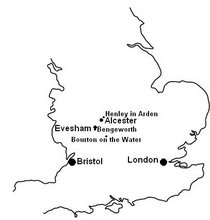
Among the worthies of the 18th Century is another name, probably less generally known, but equally deserving of Christian affection and esteem. Benjamin Beddome was one of the great and powerful characters of history. He originated religious influences which we still felt in the spiritual life of the Church. His hymns are of a soothing and elevating character. His sermons are models of chaste, pious thought, clothed in neat, compact and elegant expression. They are full of Scriptural instruction, and cannot be read without leaving the fragrance of much piety, and genuine godliness behind. Like Robert Hall and Samuel Stennett, Benjamin Beddome was the son of a Baptist minister. His father, the Rev John Beddome, was originally a member of the Baptist Church, under the pastoral care of the Rev Benjamin Keach, in Horsley-Down, London. His first settlement as minister was at Henley-in-Arden, in Worcestershire. Here he laboured as co-pastor with a Mr Wallis, from 1674 to l719. His last days were spent in Bristol. In 1724 he received an invitation to the College in Bristol, in which sphere of labour he succeeded Andrew Gifford, and his son Emanuel, and continued there till his death.
Benjamin Beddome, the son of the above, was born at Henley-in-Arden, in 1717. Very little is known of his early life. He was educated with a view to the medical profession; but during his apprenticeship, his mind was deeply impressed with religious things, and he became decided for God. He never relinquished his medical studies, but became a student of divinity, under the direction of Mr Foskett, of Bristol. In 1740, or at the age of 23, he became the pastor of the Baptist church at Bourton-on-the-Water, a village in Gloucestershire. The celebrated John Ryland became a minister of this church soon after Mr Beddome's retirement. Here he lived a retired, studious, pious, and useful life. Like some of his notable contemporaries he refused to change his sphere of labour. He was often invited to supply other churches much larger and more influential in position than his own, but he always declined to accede to the efforts put forth to draw him away from the people whom he loved. Among the churches which invited his services was the church in Goodman's Fields, then one of the largest and most important in London. He lived in the affection and esteem of his own people. They were near his heart; he dwelt in their hearts. They were married in the Lord, and refused to be separated. His pastorate extended over a period of 55 years. He died September 3, 1795, at the advanced age of 78.
Benjamin Beddome was a man of deep and devout piety, and possessed also of considerable classical attainments. There was nothing showy or ostentatious in his character. His writings impress us with the idea of meekness, gentleness, decision, and devoutness. "Mr Beddome" says Robert Hall "was on many accounts an extraordinary person. His mind was cast in an original mould; his conceptions were eminently his own though he spent the principal part of a long life in a village retirement, he was eminent for his colloquial powers, in which he displayed the urbanity of the gentleman and the erudition of the scholar, combined with a more copious vein of Attic salt than any person it has been my lot to know."