
In Beddome's lifetime bad harvests in Britain were a recurring, systemic problem that caused severe social and economic distress, particularly in the latter half of the 18th century as the population grew and the country shifted from being a net exporter to an importer of grain. While the 17th century saw improvements, the 18th century - especially the 1700s, 1740s, 1750s, 1760s and 1790s - featured several "bad years" or "dearth" years.
Key Periods of Poor Harvests in Beddome's life time
1740–1741: A very wet and stormy season in 1739 was followed by a "great dearth" in 1740.
1756–1757: Due to excessive rainfall ("the wettest summer in the memory of man"), harvests were significantly deficient, leading to major food riots.
1763–1767: A succession of poor harvests caused wheat prices to rise dramatically, leading to widespread riots in 1766.
1790s (The Great Crisis): A series of failures, notably in 1795 and 1799, caused by wet, cold weather, caused a "bread crisis". This period was marked by high prices (doubling the price of bread) and high death rates.
Consequences of Bad Harvests
Food Riots: "Moral economy" riots were common, with citizens protesting the high cost of bread and the export of grain. Significant outbreaks occurred in 1740, 1756-57 and 1766.
Social Distress: Increased food prices meant that for labourers, whose diet was heavily reliant on bread, food became unaffordable.
Government Intervention: The government frequently intervened by banning grain exports, encouraging the importation of foreign corn and promoting the consumption of mixed-grain bread (barley, rye, oats) instead of pure white wheat bread.
Dietary Changes: The crisis accelerated the shift in some regions toward relying on other staples, though the potato had not yet become a universal substitute in Britain as it had in Ireland.
Economic Impact: The high prices benefited large farmers who had grain to sell but smallholders and labourers suffered greatly.
Context of 18th-Century Agriculture
Despite these crises, the 18th century was also a period of agricultural improvement (part of the Agricultural Revolution), with new methods - such as improved crop rotation and the use of fertilisers - designed to make farming more productive and consistent. Nevertheless, climate fluctuations continued to challenge the food supply, making the 1790s a particularly difficult decade for food security.
Food riots
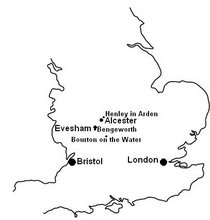
These occurred in 1766 and 1795. In 1766 Gloucestershire was one of the four worst-affected counties during the nationwide disturbances. Stroud cloth workers rioted over the high cost of bread, prompting a harsh response from the Sheriff and the hanging of ringleaders.
In Hampton, rioters destroyed houses storing provisions, which led to casualties when the military was deployed to stop them.
In 1795 a notable "bread riot" occurred in Tewkesbury on June 24, where flour destined for better prices in Birmingham was targeted.









No comments:
Post a Comment