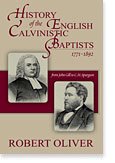
One of Beddome's few literary pieces was the "Circular Letter Of The Midland Association For The Year 1765". Here it is as reproduced in "The Primitive Church Magazine" in 1860.
The Circular Letter of the Elders and Messengers of the several Baptist Churches, meeting at Aulcester, Bewdley, Bengeworth, Birmingham, Bourton (on the water), and Stow (in the Wold), Bridgnorth, Bromsgrove, Hook-norton, Leicester, Leominster, Middleton-Cheney, Pershore, Sutton, Tewkesbury, Upton (on Severn), Warwick and Worcester; met in Association at Bourton-on-the-water, the 14th and 15th of August, 1765, and maintaining the doctrines of free grace, in opposition to Arminianism and Socinianism; and the necessity of good works, in opposition to Libertinism and real Antinomianism.
To the several churches they represent, wish a fullness of grace and spiritual consolation.
Dearly Beloved And Longed-for in Christ Jesus,— In the close of this, our annual convention, we with gratitude reflect upon the goodness of God towards us and can with pleasure inform you that our assembling together has been attended with fervent cries to the Almighty on your behalf, and, we hope, productive of some real advantage to our own souls. The spirit of prayer has, we trust in some degree been poured forth, accompanied with a humble sense of our sins and infirmities, our wants and necessities, and a thankful remembrance of Divine mercies.
Now that the profits of our meeting might not be confined to, or terminate in ourselves, we would, according to custom, tender you our cordial and affectionate advice, earnestly intreating that it might be received with a temper of mind suited to its nature and importance, and be productive of effects equal to our most ardent wishes and sanguine expectations.
Look well, then, to the foundation upon which you are built, and seriously and frequently examine your state Godward. See that you lay Christ at the bottom of your religion, as the support of it; that you place him at the top of it, as its glory; and that you make him the centre of it, to unite all its parts, and add beauty and vigour to the whole. Remember that growth in Christianity is growth in the knowledge of Christ. Seek that sorrow, that peace, that holiness, that establishment, which flow from Christ; let all your duties begin and end in Christ; for, as the great Dr Owen observes, "to take up mercy, pardon, and forgiveness, absolutely on the account of Christ, and then to yield all obedience in the strength of Christ, and for the love of Christ, is the life of a true believer." (On Psalm 130 in Volume 6). As Christ is the sum and substance of experimental, so he is the spring and source of practical religion; and the spiritual improvement of his blood by faith is as necessary for our sanctification and comfort, as the shedding of it was for our justification and acceptance with God.
Take heed lest your hearts be at any time hardened, through the deceitfulness of sin. One corruption favoured and indulged, has sometimes made dreadful havoc, even in the gracious soul. Take care of pride, passion, censoriousness, unmercifulness, and especially that inordinate affection to the things of this world, which, as it is an hindrance to duty, so oftentimes draws a cloud over the Christian's evidences, and fixes an indelible blot upon his character in the eyes of carnal men. A citizen of heaven should be a stranger upon earth.
Remember that where there is no relative religion, there is no real religion. Let your deportment, then, towards your children and servants, be grave, and yet pleasant; your instructions solemn, and yet plain; your prayers with and for them pertinent, and suited to their case; and your whole behaviour amiable and endearing. Moroseness and severity, even when attended with real piety, throw a gloomy aspect upon the ways of God, and have a discouraging influence, especially upon young persons. Bear with us, if we add one more direction under this head: - take care of stretching out family worship to an unreasonable length, or performing it unseasonably. Let it not be deferred too late in the morning, lest your hearts should be engaged in the hurries of business, and entangled with the cares of the world; nor put it off till the last thing in the evening, lest you should be overcome with drowsiness, and thus yawn out a prayer, instead of groaning out one.
Endeavour to maintain a reverential awe of God upon your minds, and be in his fear all the day long; which fear is not only consistent with an ardent love to, and steady dependence upon him, but will be an antidote against temptation, a preventive of hypocrisy, and give life, seriousness, and spirituality to all your religious duties; for to serve God in a formal and customary manner, is not to serve, but to mock him. Enter into your closets, as seeing him that is invisible; place yourselves in the assembly, as under his immediate inspection; and when called out upon particular occasions to be a mouth for others, seek not so muck the applause of men, as the testimony of your own conscience and the approbation of God.
Be just and honest in your dealings; impose not upon the ignorance or credulity of any; rather suffer by others than let them be sufferers by you; injure not your neighbour in any of his rights or possessions; make his interest your own; and what you would think it reasonable for him to do, that in a like case do to him. Nothing has ever brought a greater reproach upon Christianity than the tricking and fraudulent practices of those who are professors of it. (Footnote by 19th century editor: In this Arminian age, an indifference to practical godliness, and even common morality is frequently charged upon the advocates of free-grace gospel, or what is more popularly called Calvinism. Let those who are so forward to bring such a charge, furnish, if they can a purer morality than the above. Or, if they prefer it, let them compare the morality of modern England and its fashionable Arminianism with the state of public morals when a Calvinistic theology was the prevalent belief. Comparison would cover with a blush the cheek of many an admirer of religion based upon "the march of liberal ideas".) Attend, then, our dear friends, to that most excellent advice of the apostle Paul: "Whatsoever things are true, whatsoever things are honest, whatsoever things are just, whatsoever things are pure, whatsoever things are lovely, whatsoever things are of good report; if there be any virtue, if there be any praise, think on these things."
Be strict in observing the weekly day of rest, and, not content with attending upon public worship, let it be the Sabbath of the Lord in all your dwellings. Keep your children and servants much under your eye; insist upon their remembering something of what they have heard; put them upon reading the Scriptures; what is above their capabilities explain to them; and close the day with recommending them to God.
We would rejoice in that peace and harmony which prevail amongst the churches in general: do all that you can consistent with truth and a good conscience, for their preservation. Sacrifice private and personal interests for the public good. Endeavour after an intimate acquaintance, and keep up a Christian correspondence one with another. Walk in love, bear one another's burdens, and so fulfil the law of Christ. In a word, labour, like the primitive Christians, to be of one heart and one soul, and let the communion of saints, which is a fundamental article of your faith, be a delightful put of your experience.
Be entreated frequently to look back to your first setting out in the ways of religion. Search your hearts, and pray to God to search them. Be not contented with the form of godliness without the power—a new name without a new nature—titular sanctity without real piety - an outward profession without a holy conversation; for if, like the foolish virgins, you want oil in your vessels, when like them, you seek to enter, the door will be shut. To conclude: carefully distinguish between the means and the end: bless God for a gospel ministry, but do not rest in it; practise duties, but do not depend upon them; attend upon ordinances, but be not satisfied with them, to Christ be the glory of your religion, and then your religion will be the glory of Christ.
Need any motives be added to enforce these exhortations? Are they not evidently calculated for your own advantage. By these things men live: in all these is the life of your spirit, and we are persuaded that a due attention to them will contribute to your increasing comfort and more extensive usefulness.
To live by faith on Christ is the most sweet and delightful, to live to the glory of God the most becoming and honourable, life in the world. "It is our low, loose, unequal walking in religion," says one, "that makes the sense of God's love, peace with God, and evidence for eternal life, so rare a thing amongst us." (D Rogers of Wethersfield)
And now may the adorable and everblessed Jehovah come leaping over the mountains of your sins and iniquities, and visit you with his salvation. May he pour down, in an abundant measure, his Holy Spirit upon you. May he bless and keep you, lift up the light of his countenance upon you, and be gracious unto you. Under his Divine influence, may you stand fast in the faith, quit you like men, and be strong. Forgetting the things that are behind, may you press towards them that are before, and labour that, whether present or absent, living or dying, in the flesh or out of it, prostrate before the throne of God's grace here, or standing before the throne of his judgment hereafter, you might be accepted of him. Finally, brethren, farewell: be perfect, be of good comfort, be of one mind, live in peace; and the God of love and peace shall be with you. Thus desire and pray your affectionate brethren and servants for Jesus' sake,
(Signed on behalf of the whole Assembly, by the Moderator) John Ash, Bourton, Aug. 16, 1765.