Showing posts with label WIlliam Romaine. Show all posts

27/01/2025

Deaths of Ministers in 1795

Romaine, Stennett, Kippis

On October 18, 1795, in the year of Beddome's death, a sermon was preached by John Evans (1767-1827) at Worship Street, Shoredi
tch, being a sincere tribute of respect to the memory of the Rev Samuel Stennett, DD, The Rev Andrew Kippis DD FRSAS and The Rev Rice Harris DD. To Which Are Prefixed, A Few Particulars Of Their Lives And Writings. It was by John Evans AM and was published by request. The printer was Charles Whittingham (1767–1840) and it was sold by Benjamin Crosby, Stationers Court; Thomas Knott, Lombard Street; John Marsom, High Holborn and Joseph Cottle (1770-1853) in Bristol.
Evans, a Welshman born at Usk in Monmouthshire, studied in Bristol, where a relative, Dr Caleb Evans, was theological tutor and also in Aberdeen and Edinburgh. He came to England in June 1791 and accepted an invitation to be their pastor from the morning congregation of General Baptists in Worship Street. In 1794 he opened a school, first at Hoxton Square and subsequently in Islington. He published many works on various subjects.
His sermon is on Psalm 12:1 Help, Lord; for the godly man ceaseth; for the faithful fail from among the children of men. In the preface, where he gives some biographical information about Stennett, Kippis and Harris, he makes this remark, “... The recent mortality amongst ministers has been great. Within these few months have been numbered with the dead, Romaine, Toller, Gentleman, Flexman, Stennett, Kippis, Harris, Beddome and Clark. These were ministers of talents and respectability in their several connections, and, excepting Mr Romaine, were all of the dissenting interest.
It seems that all nine of these men died between March 15 and the date of the sermon, October 18, 1795. The order was Toller (March 15) Flexman (June 14) Gentleman (buried July 12) Romaine (July 26) Clark(e) (July 29) Stennett (August 24) Beddome (September 3) and finally Kippis and Harris (October 9 and 10).
In order of age, Flexman was the oldest at 86 (b 1708) and Gentleman the youngest at 48 (b 1746). Romaine was 80 (b 1714) Beddome, 77 (b 1717) Kippis, 69 (b 1725), Stennett, 71 (b 1727) Toller and Clark(e), both 62 (b 1732) and Harris, 60 (b 1730). Further
  • William Romaine was an evangelical London preacher in the Church of England and a friend of George Whitefield (1714-1770). He was converted in 1748 after having been in the ministry some years. A Hebrew expert, he was the author of many works, including his trilogy The Life, The Walk, The Triumph of Faith.
  • Thomas Toller was educated at Plaisterers’ Hall in London before becoming the Independent minister of Monkwell Street Chapel, London. Several of his sons were also ministers. He is buried in Bunhill Fields.
  • Robert Gentleman, a dissenting minister and tutor, was born in Shrewsbury and grew up under the ministry of Job Orton (1717-1783). He studied at Daventry under Caleb Ashworth (1722-1775) and ministered first in Shrewsbury, where he kept a boarding-school. In 1779 he became divinity tutor at the Carmarthen Academy. There were discipline problems there and in 1784 he resigned, the academy moving to Swansea. Gentleman later became minister in Kidderminster. He seems to have veered towards Arianism.
  • Roger Flexman, a non-subscribing Presbyterian minister, was a chronological and historical scholar and an indexer and bibliographer. Perhaps he should not be on this list as he became an Arian. He is also buried in Bunhill Fields.
  • Samuel Stennett DD was a Seventh Day and regular Baptist minister and a hymn writer. From an illustrious line, he succeeded his father at Little Wild Street, London in 1758. Another now lying in Bunhill Fields.
  • Andrew Kippis DD FRS was a nonconformist clergyman and biographer. He studied under Doddridge and became a voluminous writer. One of his books was about the voyages of James Cook (1728-1779). From 1753 he was a Presbyterian minister in London. Again he was probably unsound theologically and a Unitarian. Yet another now in Bunhill Fields.
  • Rice Harris DD, a Welshman, was an Independent or Congregationalist minister in London. A fifth interred in Bunhill Fields.
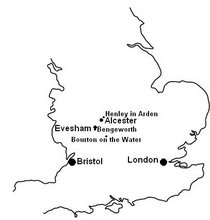
  • Benjamin Beddome MA was for 52 years a Particular Baptist pastor in Bourton-on-the-water.
  • William Nash Clark(e) was converted through Whitefield but became a Baptist minister firstly in Unicorn Yard, London and then down in Exeter. He was also a tutor for the PB fund.

Should others be added to the list? There are perhaps a few others. Again buried in Bunhill Fields, there is the Baptist William Dowars VDM (1720-1795) who died on July 1, 1795. For 38 years he was the minister of the church in Little Alie Street, Goodman's Fields. He began his ministry at Mangotsfield, near Bristol, where he laboured several years until the early death of James Fall (1727-1756), who he followed at Little Alie Street. He was succeeded by William Shenston. There is also an Independent minister called Edward Hitchin (1750-1795) who ministered in Bristol and who died January 27.
Finally, another Particular Baptist, Thomas Skinner (1752-1795) who died of a fever early in February. He ministered in Tuthill Stairs near Newcastle. Born in Northamptonshire, he grew up in Exeter where he was converted. He was educated for the ministry in Bristol and then become the first pastor of a church in Clipstone, Northamptonshire, where he baptised 60 people between 1779 and 1783. He then went to Towcester where he baptised 30 more before the move to the Newcastle area at the end of 1792. Also note James Purves (1777-1795) the Scottish universalist who ministered in Edinburgh and who died on February 1.

01/07/2023

References to other writers in Sermons in the large extra volume


Besides the eight volumes of Beddome sermons published under the title Short discourses adapted to village worship or the devotions of the family a further large volume was later published with a memoir and 67 sermons printed from the manuscripts. These contain several references to other writers, as follows.

Sermon 17 Revelation 17:14
Thomas Goodwin (1600-1680)
Wicked men may give their assent to this or the other evangelical doctrine, and have some confused notions about the work of the Spirit upon the heart of a Christian; but having no spiritual perception of these things, they are ever fluctuating and wavering, and will sooner renounce the truth than suffer for their adherence to it: nay, Dr.Goodwin, that truly evangelical writer, has a whole chapter to prove that the principles of religion are not really believed by carnal men, which seems agreeable to that of the apostle: "If our gospel be hid, it is hid to them that are lost, in whom the god of this world hath blinded the minds of them which believe not, lest the light of the glorious gospel of Christ, who is the image of God, should shine unto them."

Sermon 18 Galatians 1:16
William Romaine (1714-1795)
(Beddome calls him a reverend divine of the Established church and quotes his sermon on Mark 12:28)
By the Son here, we are certainly to understand the Lord Jesus Christ: some suppose this to be only a mediatorial or official title. "The right knowledge of God," says a reverend divine of the Established Church, "consists in believing that in Jehovah, the self-existing essence, there are three coequal and coeternal persons, between whom there is no difference or inequality but what is made by the covenant of grace. Their names, Father, Son, and Holy Spirit, are not descriptive of their nature, but of their offices. They are not to teach us in what manner they exist in Jehovah; but they are covenant names belonging to the offices which the divine persons sustain in the covenant. They are used to teach us, not how they exist, but how they act, and how they stand related to the heirs of promise."

Sermon 27
Augustine (354-430) (Confessions)
None continue the slaves of sin and Satan, but with their own consent; and if they are bound with chains, it is of their own choosing. Hence that saying of St. Augustin, "Ligatus eram non alieno ferro, sed mea ferrea voluntate:" I was bound not with a chain imposed by another, but by my own stubborn will.

Sermon 28 Luke 13:21
Huss, Jerome, Wickliffe, Luther, Calvin and the other reformers
Leaven is not only sour and disgusting, but penetrating and diffusive; and so is false doctrine. "It eats," says the apostle, " as doth a canker," or, as the word might be rendered, a gangrene; which, beginning in the extremities, soon reaches the vitals, carrying with it inevitable disorganization and destruction. Now, had not this gangrene, this leaven "hid" by Antichrist, and disguised by plausible appearances, or mingled with some important truths, at one time infected and corrupted the whole visible church, till God raised up Huss, Jerome, Wickliffe, Luther, Calvin and the other reformers? Thus the apostle Peter speaks of persons bringing in "damnable heresies," and adds, "many shall follow their pernicious ways." Thus some apply the words of my text to a general defection from the way of truth and righteousness.

Sermon 29 Jeremiah 4:18
John Chrysostom (347-407)
Of this we have an instance in the thief upon the cross: when his body was half dead, his soul was made alive to God, and he became a humble suitor to him whom he before despised; and now, instead of revilings and blasphemy, his broken accents are, Lord, remember me when thou comest into thy kingdom! His hands and his feet were nailed to the cross, but his tongue was at liberty, and this he employs for Christ, both in pleading with him and for him, and reproving those who spoke against him. Nor was it a temporal salvation that he desired, but one that is eternal; he prayed not to be delivered from the cross, but to be admitted into heaven. St Chrysostom calls this a greater miracle than the darkening of the sun, the trembling of the earth, or the rending of the veil of the temple. Surely this is also a brand plucked out of the fire. ...
Thus, when Solomon would express his abhorrence of a sin into which he had fallen, but now repented of, he speaks of it as "more bitter than death;" and it is probable he would rather have suffered the most painful death, nay, a thousand deaths, than again wound his conscience and provoke God. When Eudoxia, the empress, threatened Chrysostom with death, his bold answer was, "I fear nothing but sin."

Sermon 35 Psalm 72:15
John Owen (1616-1683) (on Hebrews 7:23-25)
“It is” says Dr. Owen, “no ways unbecoming the human nature of Christ, in its glorious exaltation, to pray to God; for this seems to be one condition of the advancement of his interest as mediator. "Ask of me and I shall give thee the heathen for thine inheritance, and the uttermost parts of the earth for thy possession."”

Sermon 40 Isaiah 11:10
Ebenezer Erskine (1680-1754)
"Faith in its justifying act" says Mr Erskine (in his sermon on Christ in the believer's arms) "is not a working but a resting grace, it lays its help where God has laid it and expects all the blessings of salvation from him in whom it hath pleased the Father that a fulness of them should dwell."

Sermon 46 1 Thessalonians 2:15
Martin Luther (1483-1546)
The seed of the serpent will still retain its enmity to the seed of the woman, and Cain, as Luther expresses it, will kill Abel to the end of the world. It is the glory of the gospel to turn the lion into a lamb; but where the light of the gospel is not come, nor the power of it felt, the savage disposition of the lion still remains.
(Also quoted in another sermon referenced elsewhere)

Sermon 59 Proverbs 18:24
Edward Young (1681-1765) Night Thoughts (the first line is from elsewhere in the poem)

Friendship's the wine of life:
A friend is worth all the hazards we can run.
Poor is the friendless master of a world:
A world in purchase for a friend is gain.

20/04/2021

A list of popular preachers given in 1799


When the Eclectic Society met in January 1799 they discussed what made preachers popular or unpopular. At the beginning John Bacon listed a number of preachers of the day and what made them popular. Here are ten

1. [George] Whitfield was remarkable for feeling, susceptibility, force
2. [William] Romaine for realizing faith; he had one subject indeed but this was the panacea; there was some variety.
3. [John] Berridge gained in some degree from the place in which he preached; he was always in populous places; simplicity was his one object
4. Rowland Hill is irregular extravagant bawling &c yet something extraordinary; upright, devoted, comes out; fire, brilliance, genius; talks rather than preaches; strong comparisons but they interest; stories.
5. [William] Jay has great natural powers, memory
6. [Samuel] Medley had some party in his spirit; glib, jocular.
7. [William] Huntington had promptitude, was easy, pleasant, fanciful like a harlequin
8. [Henry] Venn of Huddersfield some tone but remarkably fiery; current; realizing; heavenly; rapturous, holy, quickening.
9. [John] Wesley good sense, promptitude, clear, treats all circumstances as belonging to a system not that in his ministry which would independently have been popular.
10. [Robert] Robinson of Cambridge had ease comprehension, no turns or twists but new views of things &c
(He also mentions forgotten preachers [Jehoiada] Brewer - possessed moderate talents but pathos was fervent affectionate savoury no peculiar tone to obstruct and rather aided his manner encouragement to diligence was one of his frequent topics perhaps compared with the drawling manner of some other dissenters he may be classed as above the average; [William Bromley] Cadogan - had no variety tone or dash but perception of subject determination sawing through energy reality he took by force the one object he kept in view; [William Alphonsus] Gunn - without extraordinary talents but gives direction and application to the truth no tone or twang addresses this and the other evidently a good man his preaching is not treating the subject so much as dealing in address deals in general truths; [James] Fordyce - an orator but it looked not like the real thing; gilded but it wore off. He also gives the names - [William] Dodd, Harrison and Hodgson)