Showing posts with label Bourton on the Water. Show all posts

08/12/2025

Bourton on the Water Snow


https://www.christies.com/en/lot/lot-6555505

Title: Bourton-on-the-Water
Year: 1947
Artist: L.S. Lowry
Subject: The Cotswolds village of Bourton-on-the-Water
Significance: It is one of Lowry's few non-industrial paintings and is considered one of his most successful landscapes. It captures a sense of calm and ease, unlike the industrial crowds he is more known for painting.
Inspiration: The work was inspired by Lowry's visits to the Cotswolds in the 1940s, which he described as "quaint" and appreciated for the warm, honey-coloured stone of the buildings. He also illustrated a book about the area, A Cotswold Book, for which he produced 12 drawings.
Auction: The painting was part of the Modern British and Irish Art Evening Sale at Christie's in October 2025 and was valued at between £400,000 and £600,000.
Legacy: The Lowry museum in Salford, dedicated to the artist, has expressed a wish to borrow the painting on loan to display it.

28/12/2021

The Windrush


One of the chief features of Bourton is the river, the Windrush. It is a tributary of the Thames. It rises in the Cotswold Hills in Gloucestershire near Winchcombe, northeast of Taddington, which is north of Guiting Power, Temple Guiting, Ford and Cutsdean. It flows south east for 65 km (40 mi). The first 35 miles (56 km) go through Bourton-on-the-Water, by the village of Windrush into Oxfordshire and through Burford, Witney, Ducklington and Standlake. It meets the Thames at Newbridge upstream of Northmoor Lock. It gives its name to the village of Windrush, Gloucestershire.
The name is first attested in an Anglo-Saxon charter of 779, where it appears as Uuenrisc. It appears as Wenris and Wænric in charters of 949, and Wenríc in one of 969. The name means 'white fen', from the Welsh gwyn and the Old Celtic reisko.
The river may still host trout, grayling, perch, chub, roach and dace. It held good populations of native crayfish until at least the 1980s. Its waters were used in cloth and woollen blanket making in Witney from mid seventeenth century. In 2007, it was among many of the district's rivers to flood. It flooded generally but perhaps most acutely in Witney, whose only bridge across the river was submerged. Some decline has been noted, especially in years of duly reported and fined untreated sewage from plants of Thames Water. The river after drier spells sees algae formations.

12/11/2020

The Bourton on the Water Association 1765

BREVIATES. 
It was desired by one of the Churches that Professors should be caution'd against such an intermeddling with the Affairs of State as might lead them to speak evil of Dignities and censure those Things which they do not and perhaps cannot understand.
It was also requested by another Church that a Word might be dropp'd against unsettled Notions in Religion, that We might not be carried about with divers and strange Doctrines, but seek after that good Thing, an Heart establish'd by Grace.
It was also moved by one of the Brethren, that Members of Churches might be exhorted to gain some skill in the Art of Singing, in order to join in that delightful part of publick Worship, not leaving it to be chiefly or alone perform'd by the graceless Part of the Affembly.
In all which Requests We heartily concur, and therefore would recommend the Things before mention’d to your serious Consideration.
On Tuesday Evening the Messengers being met, the Letters from the Churches were read, and the Opportunity was both begun and concluded with Prayer.
Wednesday Morning Directions were given for the drawing up of the Circular Letter, and Brother Beddome being desir’d to perform that Service, some Time was spent in Prayer.
The same Day the publick Meeting was opened by Brother [Benjamin] Francis, Brother [John] Ash proceeded in Prayer, Brother [John] MGowan preach'd from Psalm xlv. and 13. Verse, The King's Daughter is all glorious within; her Cloathing is of wrought Gold. Brother Caleb Evans then pray'd, Brother [James] Turner preach'd from Romans iv. and 20. Verse He stagger'd not at the Promise of God through Unbelief; but was strong in Faith, giving Glory to God. And Brother [Philip] Jones concluded in Prayers.
In the Evening We had a Sermon upon Acts xi. 22, 23 and 24 Verses, from Brotber [Benjamin] Wallen of London.
The next Morning the Circular Letter was. read and approv'd, and Brother Beddome clos'd the Meeting in Prayer.
The next Association to be at Hooknorton, to meet on Monday Evening in the Whitsun Week, Brother [Thomas] Skinner and Brother James Butterworth to preach in Case of Failure of either Brother [Isaac] Woodman. Call at Mr. [Benjamin] Whitmore's.

20/08/2019

Bourton Postcard

Click to enlarge
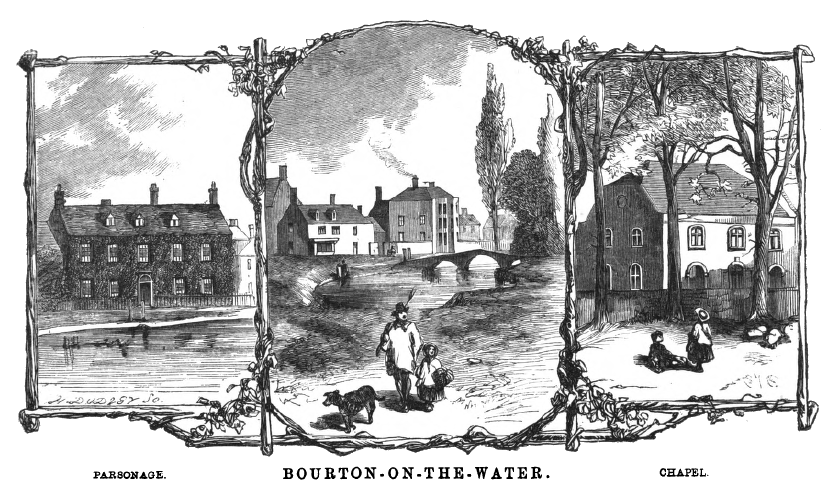
Not sure where this postcard is from but it shows Beddome's manse and the old chapel

26/09/2017

Old Manse Hotel Bourton

These pictures give a little idea of what the manse where Beddome and his family lived was like.


26/03/2012

Map 1748

Someone very kindly sent me this map of Bourton in 1748. It is marked with several interesting features. (Click to see more clearly)

29/08/2011

St Lawrence

This is St Lawrence, Bourton on the Water For details see here

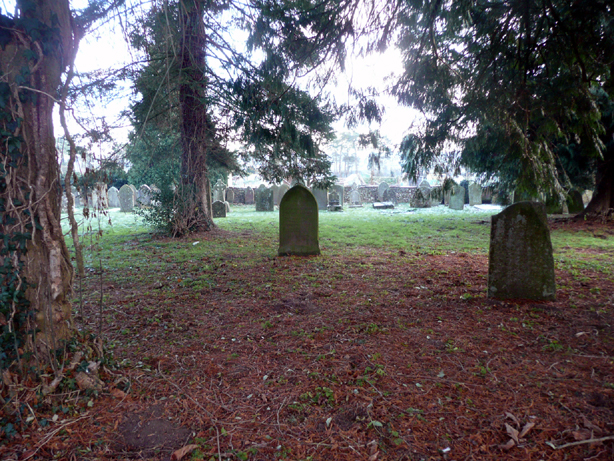
Beddome Gravestone 02

At the same site is this with the words below.
The stone in the centre of the grove is a memorial to Rev Benjamin Beddome erected by his great grandchildren. The wording states that he was 'Interred near this spot where the chapel formerly stood'. The stone is located in the Old Burying Ground, Cemetery Lane, Bourton on the Water. The 'chapel' was an early Baptist Meeting House, probably the second to be erected on this site. A new meeting house was opened in Station Road, Bourton on the Water, in 1875 and the old chapel was eventually demolished.

Beddome Gravestone 01

For some reason I've never included anything on Beddome's grave. On findagrave under Beddome's name I found three pictures and some text. The first picture is of a headstone.
Underneath it says
The rather moss-covered memorial stone to Rev Benjamin Beddome in the Old Burying Ground, Bourton on the Water. The inscription reads: Sacred to the Memory of Benjamin Beddome Born 1717 Died 1795 For 52 years Pastor of the Baptist Chapel Interred near this spot where the chapel formerly stood This stone was erected by his great grandchildren.

21/05/2011

Protestantism in Bourton

This is from the entry in the English county history series, A History of the County of Gloucester: Volume 6 'Parishes: Bourton-on-the-Water' (1965), pp. 33-49. URL: http://www.british-history.ac.uk/report.aspx?compid=66425

Protestant Nonconformity.
Bourton has long had a strong tradition of religious nonconformity, which can be traced as far as the late 16th century when the puritan divine, Richard Stock, was domestic chaplain to the lessee of the manor. Anthony Palmer, ejected from Bourton rectory in 1661, removed to London, but another Congregationalist, John Dunce, who may have been Rector of Condicote during the Interregnum, was preaching at Bourton in 1667 and was given a licence for a meeting there in 1672. Figures for 1676 suggest that Bourton had a higher proportion and a far higher number of Protestant dissenters than anywhere else in Stow deanery.
The main strength of dissent in Bourton has been with the Baptists. The Baptist community there, said to have been founded in 1650, was represented by three men at the Baptist meeting of 1655 at Warwick. In 1660 two Bourton men were preaching as Baptists in Bury field (perhaps exploiting the ramparts of Salmonsbury); one of them was Thomas Collett, possibly the man who owned Nethercote manor, was a dissenting preacher in 1715, and was buried beside the Baptist chapel in 1720, and whose house was licensed for meetings in 1689. A barn licensed later the same year may have either replaced it or provided for another group of Baptists. Collett's group were Paedobaptists: in 1700 they opened a graveyard in Salmonsbury and in 1701 their newly built chapel was licensed. The group, however, seems not to have survived separately for very long, and to have been absorbed by another group of Baptists led by Joshua Head who was preaching in Bourton in 1690 and died in 1719. The absorption may have taken place after Head's death, when 48 Baptists signed certain articles of agreement, or perhaps in 1735: the licensing of two houses as meetings in that year may be the result of re-alignments among the Baptists, and in the same year a diocesan survey recorded that a congregation largely composed of Anabaptists heard sermons on alternate Sundays from an Anabaptist called Flower and a Presbyterian grazier called Collett, perhaps another owner of Nethercote: the distinction between Anabaptist and Presbyterian may be a mistake for that between Baptist and Paedobaptist. That the Baptist community in Bourton was in some confusion is attested in 1724 by the simultaneous licensing for dissenting worship of the houses of John Collett, Andrew Paxford, and Thomas Kyte, all in Bourton; the denomination is stated for none of them, but the first two have names with strong Baptist associations.
By 1740, when Benjamin Beddome, the hymnologist, began his 45 years as Baptist minister of Bourton, the Baptists appear to have been united, meeting in the chapel built in 1701. In 1748 a manse was built, and the chapel was rebuilt. A new chapel was opened in 1765 on the occasion of the meeting in Bourton of an association of 15 Baptist churches. The numbers of Baptists in the Bourton congregation rose from c100 in 1735 to nearly 200 in the 1750's; it included people from many neighbouring parishes, Naunton and Stow-on-the-Wold among them, and the severance of those places under their own ministers accounts for the apparent drop in numbers at Bourton before 1795. Beddome's death in that year was followed by dissension among the Baptists of Bourton, and it was not until 1801 that they were again united under a single permanent minister. By then the numbers had dropped to 47, and from this time the community was one of Particular Baptists. In the 1850's the membership was nearly 100, and was said to include a high proportion of the wealthier inhabitants. Congregations of over 400 were claimed.
The 18th century chapel, the site of which was visible in 1962 in the graveyard off Station Road, was replaced in 1876 by the church, built of stone with a Welsh slate roof, at the High Street end of Station Road. In 1962 the church, which was in membership with the Baptist Union, had branches at Aston Blank and Clapton, and membership totalled over a hundred.
The old manse was sold in 1928, and a new one built in Moore Road. The proceeds, £653, of the sale in 1950 of land belonging to the chapel was invested in stock, and another £300 was given for the maintenance of the church under the will of C V Wilkins (d 1951).
Rooms in private houses were registered for worship in 1829, 1831, and 1845 (the last two, apparently, for the same group). A Zion chapel in Lansdown, registered in 1843, may have been Methodist, but no return for it was made in 1851. By 1872 it was used as a school, and continued as such until 1902. The chapel was apparently the building converted into a private house by 1962 and bearing an inscription stone from which all but the date 1842 had been erased. A Primitive Methodist chapel in Clapton Row was built in 1868; in 1904 it became a Christadelphian meeting, and was still so used in 1962.

29/07/2010

The Snooke Diaries

I made one of my little trips the other day. This time to the Gloucestershire Record Office in Gloucester, where they have transcripts of four diaries by William Snooke, esq. These diaries are for 1768, 1769 (though January-September has been excised from the original for some mysterious reason), 1774 and 1775. The diaries contain sparse comments on every day life and accounts.
I only had time to take notes from two and a half diaries so will have to return for the rest.
Most fascinating from our point of view are the references to Beddome and his family, especially the record of his texts Sunday by Sunday (except when Snooke is in London) and often in the week too. Initial observations are these
1. It appears to have been the Beddomes' practice to take tea at the Snookes on Mondays. Sometimes it was on another day or without Benjamin's presence or not at all.
2. Beddome, as we know, was a textual preacher but he often preached runs of sermons on a passage, such as a Psalm or part of Matthew 25.
3. He was not over fastidious about keeping such series to the right service, ie having started a morning series he might switch to the afternoon.
4. Sometimes funerals would take place with a sermon at the time of the regular worship.
5. There were meetings in the week. In the earlier diaries these take place on Fridays (Preparation day) but later move to a Wednesday.
6. The sacrament was observed usually once a month. There is no obvious pattern, however.
7. Two Sundays a month were Stow days when, presumably, there was also a service in Stow.
8. Beddome was the usual preacher unless he was away at the Association, in London, unwell or making room for another preacher.
9. The evidence for Snooke's regular payments to Beddome is here. It was £2 2 0 quarterly.
10. Snooke obviously loved preaching, being a regular hearer of Beddome and other preachers. He also bought and read sermons. He gave to beggars from time to time. He also went to plays and other entertainments in London and occasionally did the lottery. There is no strong evidence of rigid Sabbath keeping.

01/07/2010

Pictures of the Past

The history of the church at Bourton on the Water "Pictures of the past" by a one time minister, Thomas Brooks, is now fully available on Google Books here. A quick search reveals several interesting items. These will follow - we hope.

31/10/2008

Robert Coles Brother of Thomas

In the Baptist Magazine for 1862 there is under the heading "Recent death" an obituary for Mr Robert Coles who had died at Winston Мill, Gloucestershire, on March 30, 1862. Coles was born in 1773 at Ailworth Farm, near Naunton, Gloucestershire. His parents, we read, "were regular attendants upon the ministry of the Rev Benjamin Beddome, MA, of Bourton-on-the-Water; and though they removed when their son Robert was about four years old, to Rowell farm, near Winchcomb, and seven miles from Bourton, yet their places in the accustomed sanctuary were always filled at the Sabbath morning services. 'The word of the Lord was precious in those days,' and the eminent gifts of Mr Beddome were not unappreciated by them; for seventy years afterwards their son could speak with vivid recollections of the outline of the sermon, which was regularly brought home by his father on the Sunday morning, to be the subject of meditation and conversation through the rest of the day."
It goes on to speak of his conversion and his later involvement and interest in the progress of the gospel in the village of Arlington. A miller by trade he was also a deacon and a godly man.
It says that the early seeds sown "were watered when he himself frequented the house of God where the venerable Beddome now trembling with age and feebleness sat in his pulpit to teach and exhort, and still loved to unite the hearts and voices of his people in the hymn which, Sabbath after Sabbath, embodied the preacher's deepest feelings on the subject of the morning's sermon. In after years the hallowed spot was rendered yet more interesting by his own brother the Rev Thomas Coles AM being called to the pastorate as successor of Mr Beddome, at the beginning of the present century. By his brother's hands he was solemnly immersed in the stream which flows through the beautiful village of Bourton and although residing at ten miles distance was accustomed to attend there at the monthly celebration of the Lord's supper."

06/07/2008

Midland Association 01

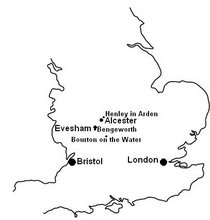
The Midland Association of Baptist Churches was founded in 1655. It continued to meet annually (in different places, usually for two days in Whitsun week) throughout Beddome's life time and beyond. By 1761 churches involved included those at Alcester, Bewdley, Bengeworth, Birmingham, Bourton (Beddome's church), Stow, Bridgnorth, Brittlelane, Bromsgrove, Dudley, Hooknorton, Leicester, Leominster, Middleton-Cheney, Pershore, Sutton, Upton, Tewkesbury, Warwick and Worcester. These churches were united in holding to the stated Calvinistic doctrines of the Trinity; election; original sin and man's depravity; particular redemption; free justification by the imputed righteousness of Christ; efficacious grace in regeneration and final perseverance, and the unstated Baptist doctrines as found in the 1689 Confession.
The association regularly produced a printed sheet set out in a quite stylised form similar to those produced by the other associations.
1. The heading The circular letter of
2. The elders and messengers of the several Baptist churches at Alcester, etc. Sometimes churches were unable to attend but sent letters of support.
3. Met in association at Bengeworth (or wherever else)
4. Maintaining the great doctrines of three equal persons, etc, etc
5. To the respective churches represented by them with a spiritual greeting or blessing
6. Dear or Beloved brethren
7. The circular letter itself then followed, taking up the bulk of the pamphlet (of 4 or 8 pages). This Letter was authored by a minister appointed for the year. It was read to the ministers and messengers assembled in association and could be amended by them before being adopted for printing and circulating to the members of the association churches.
8. The letter was signed by the moderator appointed for that association on behalf of the churches
9. Sometimes there was a PS advocating prayer meetings or such like
10. Minutes (or breviates) of the association's proceedings that year naming preachers and those who prayed came near the end. These minutes sometimes refer to issues raised by churches.
11. At the end of the minutes there was information about the time and place and sometimes the preachers for the next association. There was often reference to what inn to stay at.
12. From 1765 statistics were included regarding baptisms, deaths, etc, either before or after the last item.
13. The final line was usually the printer's – Worcester: printed by R Lewis – but that could be inserted elsewhere.
Beddome first preached for the Association in 1743. Regular printing of its Circular letter apparently began in 1759. Details are sketchy, therefore, 1743-1758. Beddome preached at the association 17 times over 46 years (ie 1743-1789). That first one of 1743 was held in Leominster. He must have preached another 10 times 1744-1763. He went on to preach another 6 times – 1764, 1767, 1773, 1778, 1780 and 1789. He probably authored the circular letters of 1759 and 1765. He was association moderator in 1761 and 1771.

13/02/2008

Beddome Memorial Bourton

SACRED
to the Memory of
The Revd BENJn BEDDOME
Fifty two Years
Pastor of the Congregation
meeting in this Place;
He Died Sepr 3d 1795,
Aged 79
Also of ELIZABETH his Wife
She died Jany 23d 1784.
Aged 52
The Memory of the just is Blessed
(This plaque is found in the current Baptist Church in Bourton on the Water)

26/06/2007

Bourton on the Water 0407


Picture sequence found on YouTube

22/02/2007

Old Manse


The Old Manse Hotel in Bourton gets its name from the fact that for most of his time in Bourton this is where Beddome and his family lived.

Bourton on the Water


Bourton-on-the-Water, just south of Stow-on-the-Wold, has a population today of 2,700. This is vastly swollen in the tourist season by thousands coming to see what an article in The Times in the summer of 1996 described as ‘arguably the most beautiful village in the Cotswolds’. In Beddome’s time there were more sheep than people and the houses huddled either side of the River Windrush formed what really was an out of the way place. Here Beddome ministered for nearly 55 years.