Showing posts with label Bristol. Show all posts

04/11/2022

Beddome Relatives and Samson Occom


From the records, it is clear that contributions to the collection that Samson Occom and Nathaniel Whitlock made in England in 1765-1768 that not only did Beddome's own congregation give £30 but his relatives in Bristol also gave. His brothers-in-law Edward Bright and Christopher Ludlow gave a guinea and five guineas each.

03/01/2022

Boswell B Beddome

We have made one or two entries about the third Beddome son. In the Dissenting Academies database here we learn that somewhere around 1784 BBB studied at Bristol at his father's expense. His birth date being around 1763 he would have been in his twenties.

21/04/2021

Swaine on Beddome

This is the piece by S A Swaine that appeared in Faithful Men: or Memorials of Bristol Baptist. College in 1884.

The third, who was admitted to the institution, about 1737, settled as pastor at Bourton-on-the-Water. He was about seven years of age when his father, the Rev John Beddome, removed to Bristol. He was apprenticed to a surgeon and apothecary, manifesting in his early youth apparently no desire for the ministry, ore even evidence of Christian decision. Indeed, the very contrary would seem to have been the case, for we are told that "the wit and vivacity which, in a measure, continued with him to the end of his days, accompanied his juvenile steps into the public walks of life," and that "the bent of his mind affected and afflicted his parents several years."

He was at length aroused to serious thought by a sermon on the words, "Likewise joy shall be in heaven over one sinner that repenteth," &c. The date is fixed by a memorandum in his own handwriting, as follows:- "Mr. Ware, of Chesham, uncle, I believe, to Coulson Scotton, Esq.. preached at the Pithay, Bristol, August 7, 1737, with which sermon I was for the first time deeply impressed. Text, Luke xv. 7." Although his father's ministry had not affected him before, it did afterwards much. That he might conceal his tears, he would sit behind in the gallery, where he was not likely to be seen and when questioned by his parents why he chose such a place, would reply "That his profession sometimes obliged him to come in late or to go out early, neither of which had a becoming appearance in a minister's son." The language of one of his hymns - for to him we owe some of our most devotional spiritual songs - appears, at least at this time, the dictate of his heart:-

Lord, let me weep for nought but sin,
And after none but Thee
And then I would, O that I might,
A constant weeper be!

At length he found peace, and at the expiration of his apprenticeship began his studies for the ministry. At his ordination the charge was given by Mr. Foskett from I Tim iv:12 "Let no man despise thy youth" and Mr Stennett preached to the church "Obey them that have the rule over you," &c. (Mt. xiii:7). Messrs. Haydon, Cook, and Fuller of Abingdon, prayed ; and the ordination prayer was offered by Mr. Foskett, with the laying on of the hands of the presbytery. Mr. Beddome became soon very attached to the scene of his labours, as is shown by lines which he penned in 1742.

Lord, in my soul implant thy fear,
Let faith, and hope, and love be there;
Preserve me from prevailing vice,
,,,
Then make her willing to be mine!
My dwelling place let Bourton be,
There let me live, and live to thee!

The "companion of his youth," with the "modest charms," &c., proved to be Miss Elizabeth Boswell, one of the daughters of Mr. Richard Boswell, one of his deacons. His marriage took place in 1749. His wish that Bourton might be his dwelling place was fulfilled to the utmost, for there he dwelt and laboured to the end of his days, not, however, for lack of calls and inducements to leave it. In particular, he received a most pressing invitation to Goodman's Fields, the largest Particular Baptist Church in London at that time, on the decease of the pastor, the Rev. Samuel Wilson. He repeatedly declined but so pressing were the people that they would take no denial. In these circumstances Mr Beddome threw himself into the hands of his people, desirous of acting according to their wishes. They sent an absolute refusal to London; and he concluded the whole business in these words:-

"If my people had consented to my removal (though 1 should have had much to sacrifice on account of the great affection I bear them, yet) I should then have made no scruple in accepting of your call; but as they absolutely refuse it, the will of the Lord be done. I am determined I will not violently rend myself from them ; for I would rather honour God in a station much inferior to that in which He bath placed me than intrude myself into a higher without His direction."

Mr. Beddome's sermonising faculty seems to have been of the most striking kind; his facility in this direction is described as surprising. As an example, he was appointed to preach at a ministers' meeting at Fairford, in Gloucestershire, on which occasion, after the service began, his natural timidity, it seems, overcame his recollection. His text and his discourse, for he neither read nor used notes, both left him. On his way from the pew to the pulpit he leaned his head over the shoulder of the Rev. Mr. Davis, the pastor of the place, and said, "Brother Davis, what must I preach from?" Mr. Davis, not supposing for a moment that he really was at a loss, replied, "Ask no foolish questions." He was at once delivered from his dilemma, and turning to Titus iii. 9, "Avoid foolish questions," he preached what was described as a remarkably methodical, correct, and useful discourse on it.

His academical degree was conferred upon him by the Fellows of Providence College, Rhode Island, in 1770 as a token of respect for his literary abilities. He lost by death several most promising sons, two of whom were trained to the medical profession, and one of them graduated both at Edinburgh and Leyden with great distinction. This talented young physician - whose Philosophico-medicum inaugurate de hominum varietatibus et carum causis, was at that time much admired - was only twenty-five when he died. On the very day his son died, the death taking place at Edinburgh, Mr. Beddome, not even knowing of his illness, preached from Ps. xxi.15 "My times are in Thy hand;" after which the following beautiful hymn, which he had specially composed to follow the sermon, was sung :—

My times of sorrow and of joy,
Great God, are in Thy hand;
My choicest comforts come from Thee,
And go at Thy command.
...

Here perfect bliss can ne'er be found,
The honey's mixed with gall;
'Midst changing scenes and dying friends,
Be Thou my all in all

It has been said that this hymn was specially composed for the occasion, and it ought to be added that, throughout the greater part of his life, Mr. Beddome prepared a hymn to be sung after his morning sermon every Lord's day.

This model village pastor reached the patriarchal age of seventy-nine years, fifty-five of which he spent as minister at Bourton. He departed this life September 23, 1795. So far as is known, he published nothing but a Catechism, and the Association Letter in 1765. but three volumes of his sermons were published after his death.

21/09/2020

John Beddome in Bristol

From The Rise and Progress of Dissent in Bristol; Chiefly in Relation to the Broadmead Church J G Fuller, 1840

In July, 1723, about three months prior to the decease of Mr. Emanuel Gifford, Mr. William Bazley was regularly ordained in the church as joint-pastor; and, in the following November, was joined by Mr. John Beddome, the father of the celebrated Benjamin Beddome, of Bourton-on-the-Water. Mr. Bazley died in August, 1736.
Mr. Beddome was the intimate friend of Bernard Foskett, and their friendship is described as resembling that of David and Jonathan, He died in 1757, in the eighty-third year of his age.
The following letter of dismission is equally creditable to Mr. Beddome and to the church from which he was dismissed to the Pithay.
To the church of Christ, meeting behind the Pithay, Bristol, under the pastoral care of Mr. William Bazley, the church of Christ, meeting at Alcester, in the County of Warwick, sendeth christian salutation.
Beloved in the Lord,
It is with great sorrow of heart, that we write unto you on this occasion. The thing that we have oft feared and long deserved is now come upon us. We have found it hard to digest your desire of our minister; and could not but take it very unkindly at first, that you should seek to remove from us such one as our worthy brother, and dearly beloved elder, Mr. John Beddome. We could not forbear remonstrating to you about it, and endeavouring to hinder the loss of so useful a minister, not only to us, but also to several other churches in these parts of the country. It is with much reluctance that we dismiss him to any other people : but seeing you, who are so considerable a people, have once and again, so unanimously chosen him to be your pastor, and he is willing to serve you in that capacity, we would hope such a spring as this bids fair for much fruit of mutual comfort, and in hopeful expectation thereof we submit. Our affection to him will not allow us to cross his inclination, and our gratitude to him for his many labours of love amongst us, excites our desires after his own and his family's greater comfort; and since it is so, as we believe it to be our duty, we would recommend him unto you. But in this respect we do not pretend to say of him the thing that is meet, or to characterize him answerable to his desert. We shall leave you to learn the knowledge of his worth in your own experience of him. It may suffice for us to inform you, that he was many years ago baptized into a church in London, [Mr. Piggott's church, Little Wild-street,] and from thence recommended to us; that after we had sufficient trial of his gifts, and had often tasted the sweetness of them, he of October, 1711, in conjunction with our beloved brother, Mr. Bernard Foskett, solemnly set apart with imposition of hands, to the office of a teaching elder; in the execution whereof, he hath ever since exhorted, comforted, and charged every one of us, as a father doth his children, and has walked in fellowship with us as became a gospel minister. He has exercised much lenity towards us, and his great aim has been to nourish our souls with the words of sound doctrine, and his manner of life hath been agreeable to it. It is with regret that we transfer our right in him to you; but yet 'tis our earnest desire that the Lord may make him a burning and shining light among you, and crown his labours with great success.
We do also dismiss and recommend unto your care, our beloved sister Rachel Beddome, his wife; who came to us from a church at Nantwich with an ho. nourable character, and has for several years walked with us as becometh the gospel.
We desire and hope you will treat him as an ambassador of Christ, and esteem him very highly for his works' sake; that by your peace and unanimity, respect to his person, and regard to his administrations, you may make him comfortable, and be his joy and crown in the day of the Lord Jesus. We hope he will be the spiritual father of many children among you, and that you will contribute all you can to make his way smooth through this thorny wilderness,
Brethren, receive them both in the Lord; and since you bereave us of so great a blessing, we can't but most humbly, earnestly, and unanimously, intreat two things at your hands, before we close this our epistle: one is, that Mr. Beddome may give us an annual visit whilst life and strength are continued; and this we are the more encouraged to hope both you and Mr. Beddome also will readily comply with us in, because it is agreeable to the apostles' custom to visit the brethren, and see how they do. The other favour we desire is, that you would make conscience of continued and earnest prayer for us, that we may be built up notwithstanding, and blest with our remaining helps. These are the easiest requests we can make, and we trust you'll not be unwilling to grant us our desire herein, it being the least you can do for
Your afflicted brethren in Christ, &e.
After the death of Mr. Bazley, Mr. Josiah Thompson, previously of Pershore, was co-pastor with Mr. Beddome, and on his leaving, Mr. Needham was chosen to succeed him. Mr. Beddome's infirmities requiring additional assistance, Mr. Joseph Anstie, previously a member of the church at Devizes, was, for some time, assistant minister. In 1752, the church invited Mr. Tommas, of Gildersome, to be co-pastor with Mr. Needham, which, though happy in its ultimate results, led to much unpleasantness.
From time immemorial, the congregation in the Pithay were accustomed to have two pastors. This, if not commenced, was continued for many years, from necessity--there being two branches of the church at a distance, to be supplied every Lord's-day - one at Keynsham, the other at Hanham - both which are now under the pastoral care of the Rev. Thomas Ayres. Still, the inconvenience of a co-pastorship had long been felt and complained of. Exclusive and rival attachments were formed : one was for Paul, another for Apollos; and the harmony which should subsist in christian communities was, not seldom, interrupted. The church therefore resolved, that if they could once get clear of co-pastorship, it should never, except in case of necessity, be re-admitter. Mr. Needham himself, in deference to this feeling, was not chosen to the pastoral office until Mr. Beddome was rendered in a measure incapable of service by age and infirmities. When this necessity came, Mr. Needham was ordained; but an entry was made in the church-book, and signed by Mr. Beddome, two of the deacons, and other leading men, that there should in future be no co-pastors except in a case of similar necessity; viz. that Mr. Needham might live to be unable to discharge the duties of the office by reason of age or infirmity.
But Mr. Tommas, no party, of course, to such an arrangement, declined their invitation, unless he should be chosen as pastor : and the people, rather than lose him, resolved on receiving him on his own terms. Mr. Needham, foreseeing the consequences of such a resolution, and apprehending, that, should it be accomplished, his life would be rendered uncomfortable, frankly unburdened his mind to Mr. Tommas, and remonstrated again and again with the church resting on the resolution that had been solemnly passed. Mr. Needham, at length, reluctantly agreed that Mr. Tommas should be co-pastor ; but a concession produced by threats of dismission could not be pleasant. This was in August; and in October, he was pronounced, by a person, not a member, but deputed by the deacons, to be no longer pastor or member of the church which he had hitherto served with fidelity and reputation; and this treatment they said he deserverl, because he was unwilling to resign a pastorship to which he had been unanimously called, and to forfeit which he had done nothing worthy of reprehension. This sentence being confirmed by the church, Mr. Needham removed to the church in Callowhillstreet (singularly enough) as co-pastor with Mr. Foot.
But that his objection to Mr. Tommas was not personal, is evident, from the fact that they were accustomed to visit on friendly terms.
Mr. Tommas became the pastor of the church in August, 1753, without a dissentient voice -- Mr. Beddome, at the same time, affectionately resigning his office into the hands of the church. It was a solemn day, the whole transactions being closed with the celebration of the dying love of Him, who, though dead, is alive again, and liveth for evermore.

14/09/2020

Bristol Education Society Sermons 1773-1783

From 1773 it was the pattern for the Bristol Academy to invite someone to preach at their annual meeting usually in August. This sermon was then published. Beddome seems never to have been asked to preach. By 1783 he was 66 and often not well. Information on these sermons for 1784-1794 is harder to come by.

1773 Hugh Evans The able minister 2 Cor 3:6 
1774 John Tommas Serious Advice to Students and Young Ministers 1 Tim 4:12
1775 Caleb Evans The Kingdom of God Matt 6:10
1776 James Newton The Good Steward Luke 16:2 
1777 Daniel Turner The Divine Appointment, and Great Importance of the Christian Ministry Considered Amos 2:11 
1778 John Ash The Perfecting of the Saints for the Work of the Ministry Eph 4:11, 12
1779 Robert Day The Labour and fruits of a Christian husbandman 2 Tim 2:6
1780 John Ryland The Wise Student and Christian Preacher 1 Tim 4:15
1781 Robert Robinson Kingdom of Christ not of this world John 7:36
1782 John Reynolds The unsearchable riches of Christ Eph 3:8 
1783 Samuel Stennett The Utility of learning to a Christian Minister Acts 26:24, 25

14/06/2019

James Hinton

In the biography of the dissenting minister James Hinton 1760-1823, by his son John Howard Hinton, this paragraph appears.

The academy at Bristol was contemplated as the most desirable place for his preparatory studies, and his father requested the Rev. Mr. Beddome, of Bourton on the Water, to lay the case before the president, Mr. Evans. As the resources of his parents were small, some difficulties of a pecuniary nature were apprehended - a subject on which Mr. Evans wrote with his characteristic kindness, and gave assurance of considerable aid: the matter was also very kindly taken up by Mr. Sleap and his friends at Chesham, who promised a contribution yearly, during his stay at the academy.

Hinton preached to the church (Colossians 1:9) when Thomas Coles was ordained at at Bourton, November 17, 1801. This sermon and Dr Ryland's to the minister were published together subdequently.

20/04/2017

Reference to Beddome by William Steele in 1777

In a letter written from William Steele 1715-1785, brother of Anne, to his 24 year old niece Mary Steele 1753-1813 (who married Thomas Dunscombe 1748-1811 but only in 1797) on Tuesday, September 9, 1777, Steele refers to a smallpox epidemic in Bristol that necessitates his returning to Broughton via Amesbury, He hopes to “see Stonehenge”. He mentions a rumour that Beddome's protege Mr [Nathaniel] Rawlin(g)s has been asked by Trowbridge Baptists to leave Bristol [or Broughton?] and return to Trowbridge as their preacher, working in the clothing trade with his wife's relations. He says that he met Mr and Mrs Bedome [sic] at Mr Norton's on September 8 and Beddome (by then over 60) preached at Broadmead on the Sunday morning (presumably September 7). He also describes Henry Kent who “has become so great a beau” in second mourning. The letter includes a postscript from “Amanda” [Miss Amanda Froud] to “Sylvia” [Mary Steele].
Robert Norton 1744-1808, was a Bristol clothier, married to Hannah Evans (1746-1807), daughter of Hugh and Sarah Evans. He was also brother-in-law to Thomas Mullett (1745-1818). Like Mullett who removed to London he would leave Bristol and the Broadmead Church for Nailsea to become a successful clothier and tobacconist. He was in business with John Heskins (1778-1838), who was married to a daughter of Benjamin Francis, and a son of Beddome's. His daughter Sarah Evans Norton Biggs (1768-1834) would become a friend of the poet Mary Steele and an acquaintance of the diarist Henry Crabb Robinson (1775-1867).

31/03/2015

Lecture notes in Bristol

There are three or four books of lecture notes donated to the Bristol College by Beddome in 1794

1.  See
Reference number: G93A/Ze16
Creators:
Person as subject:
Title: Notes on Pneumatology lectures ?poss by Bernard Foskett
Dates: c.1739- 1753
Description:
Card description: ‘BEDDOME, Benjamin | G93a Z e 16 Pneumatology. Ms. N.d. These may be Beddome’s notes on Foskett’s lectures. 180p [barcode: 14392]’
[Front board] coat of arms of ‘A: Gifford, D.D. of the museum’; pasted slip (printed): ‘LIBRARY Baptist College BRISTOL.’, overwritten in pink pen: ‘Z.e.16’
[fo. ir] [first hand:] B. Beddome Pneumatology [second hand:] may be his writing [stamp:] G 93[A written in pen],  [pencil:] 14392, [red ink:] Z.e.16 [pencil] by Bernard Foskett?
[fos. iv-iiv] [blank]
[fo. 1] Pneumatology | Introduction
[fos. 11v-13v] [blank]
[fos. 14r-18r] [begins in medias res]
[fo. 18r] OF TASTE
[fo. 21v; p. 48] Of Hearing Section 1st
[fo. 29r] Of Touch. Sect: 1st of Heat & Cold
[fo. 42v] Of Extension
[fo. 67v] Of the Culture of the Senses
[fo. 69r] Of the Senses of Brutes.
[fo. 70r] Of Memory.
[fo. 76r] Of the Imagination
[fo. 80r] Of Reflection
[fo. 80v] Of Taste
[fo. 85v] Of the operations the mind performs with regard to the Sources mentioned.
[fo. 86v] Of Dividing.
[fo. 88r] Of Compounding
[fo. 89r] Of Comparing
[fo. 89v] Of Moral Faculty
[text ends at base of fo. 90r in middle of sentence; fo. 90v blank; back board has ‘1/2’ written in pen]
Extent: 1 vol
Sources of information: Mark Burden

2. See
Reference number: G93A/Ze18
Creators:
Person as subject:
Title: Institutiones ethicae (John Eames, transcribed Benjamin Beddome?)
Dates: c.1737- 1794
Description:
‘This Manuscript written by the Revd. Benj. Beddome when a Pupil of the Revd. Mr Eames by whom it was composed was given by Mr Beddome to the Library belonging to the Educatn. Society for educating Baptist Minrs. in North Street Bristol. ~ 1794.’ [in pencil:] ‘The hymnes at the other end of the Book are the composition of Mr B. Beddome & many of them are inserted in the Evangelical Magazine of 1795 & following years.’
[fo. 1r] ‘Institutiones Ethicae; ex Autoribus praecipuĂ© notis transcriptae, ac in usum Juventutis Academicae in Compendium redactae. | Prolegomena De naturâ Ethices, ejusq; Partitione.’
[fo. 5r] ‘Institutiones Ethicae &c: Pars. Ima:’
[fos. 12r-52r] ‘Pars. IIda
[fos. 52v-35v rev.] Hymns.
Extent: 1 vol
Sources of information: Mark Burden

3. See
Reference number: G93A/Ze39
Creators:
Person as subject:
Title: Notes on Pneumatology lectures by Henry Grove [previously thought to be by Bernard Foskett]
Dates: c.1707- 1738
Description:
Card description: FOSKETT, BERNARD G93a | Pneumatology. MS. n.d. | Presented by Benjamin Beddome in 1794, and reported to be in Foskett’s own hand. [barcode: 14414]’
[Front board] [red ink:] Z.e.39 [second hand in blank ink:] This Manuscript | written by | the Revd. Bernard Foskett | then Pastor of the Church | in Broadmead | & Tutor of | the Baptist Academy, | was given to the | Baptist Library | belonging to the Education | Society | by the Revd. Benj. Beddome | of | Bourton on the Water | 1794. [pencil:] 14414 [stamp:] G 93[A written in pen] [purple stamp, crossed through in black ink:] 88d
Contents [see back of volume]
[p. 1] The Introduction What a Spirit is three Kinds of Spirits making the Scale of Being & why We should consider our Souls
[p. 2] 3 Uses of Ignorance of our Selves
[p. 3] 4 Uses of the Knowledge of our Souls
[p. 4] 3 Uses of ye Knowledge of Angels & one of the Knowledge of God
[p. 5] Of ye Souls Existence & how We know it
[p. 7] Of the Essence of the Soul
[p. 9] 3 Reasons why Thinking is not the Essence of the Soul
[pp. 11, 20] Mr. Lock’s personal Identity consider’d
[pp. 12, 96] Of the Immateriality of the Soul
[p. 15] Of Thinking
[p. 16] Thinking essential it always thinks
[p. 23] Of Ideas, Sensation & Imagination
[p. 25] The Seat of Ideas in the Mind
[p. 29] The Nature of Ideas
[p. 31] The Original of Ideas
[p. 36] The Faculties of the Soul
[p. 37] Imagination beyond Sense in 3 Things
[p. 39] 3 Reasons for Memory being lodg’d in the Mind how distinguish’d from Imagination
[p. 41] What the Will is &c
[p. 46] Habits Intellectual & moral
[p. 48] Affections or Passions
[p. 51] Three Ranks of them
[p. 54] Benevolence & Malevolence
[p. 55] Complacence & Displicence [sic]
[p. 56] Desire & Aversion
[p. 57] Hope & Fear
[p. 58] Joy & Sorrow
[p. 60] Gratitude & Anger
[p. 62] Of the Ubiety of the Soul
[p. 65] Of the Union between Soul & Body
[p. 71] Of the Original of the Soul
[p. 75] Of the Immortality of the Soul
[p. 85] Of the Seperate [sic] State of the Soul
[p. 90] Is it in this State a pured naked Spt.?
[p. 93] Of the Apparition of Deptd. Souls
[p. 94] Of Seperate [sic] Souls Converse wth each other
[p. 107] Book 2d Of Angels
[p. 111] Of the Distinction of Angels
[p. 116] Of Evil Angels
[p. 119] Of the Residence of evil Angels
[p. 123] Of Temptations Possessions &c
[p. 126] Of Apparitions of the Devil
[p. 129] Of Witches
[p. 136] Of God
[p. 141] A brief Demonstration of the Being & Attributes of God
Extent: 1 vol
Sources of information: Mark Burden

4. See
Reference number: G93A/Zh6
Creators:
Person as subject:
Title: A brief introduction to Chronology (Bernard Foskett, transcribed Benjamin Beddome?); Institutiones Ethicae (John Eames, transcribed from Benjamin Beddome's MS?)
Dates: c.1740- 1740
Description:
[front board] ‘The Gift of the Revd. Benj. Beddome, to the Library in North Street, Bristol, belonging to the Baptist Education Society, 1794.’ Bookplate for the ‘LIBRARY, BAPTIST COLLEGE, BRISTOL.’
[fo. 2r] ‘A brief Introduction to Chronology’
[fo. 63r] ‘We proceed to ye 2d part of Xonology, which considers time in particular, & demonstrates ye Certainty of ye Epocha’s or AEras made use of by Historians & Chronologers, as also explains ye Calendars of several Nations.’
[fo. 78r] ‘Of the most celebrated Epocha’s, mention’d in sacred and profane History.’ Table.
[fos. 83r-89r] ‘Of Numerical Letters, Figures, &c.’
[fos. II.1r-II.4r] ‘Mr Eames’s Institutiones Ethicae copy’d from Mr Beddome’s MS.'
[fo. II.4v-end] Blank.
Extent: 1 vol
Sources of information: Simon Dixon, revised Mark Burden

09/05/2013

Theological education

According to my understanding, Beddome became a student at Bristol in 1737 and moved on to London in 1739. However, the notes he took of Foskett's lectures on pneumatology now in Bristol are dated 1741 by which time he had been called to Bourton. This suggests some post-college work or a return to the college perhaps. In fact the notes turn out to be in Foskett's hand.

20/06/2011

Rachel Beddome's Gift

It appears from this entry in a Bristol Charity Book available online that when Beddome's mother Rachel Beddome died in 1758 she left £100 to the Pithay church in Bristol.

RACHEL BEDDOME'S GIFT
There is nothing to lead us to the origin of this charity, but the memorandum-book before-mentioned, in which it is stated, that "Mrs Rachel Beddome left to the congregation of Dissenters, meeting in the Pithay, 100£ towards a house for the minister to dwell in, which 100£ is at present in the hands of William Ludlow, senior. The interest hath been at four per cent., and paid to the Rev Mr Tommas." (NB This 100£ was paid into the hands of Mr Christopher Ludlow, by the executors of Mr William Ludlow, 13th January, 1766, but has been since paid by him, with the consent of the Rev Mr Beddome, towards the purchase of the parsonage house in Cumberland-street, which cost 330£.)

By an indenture, bearing date 29th November, 1774, made between Edward Golledge and Abraham Blatchley, of the one part; Thomas Ludlow,* and others, of the other part; the parties of the first part, in consideration of the sum of 330£ granted to the parties of the second part, all that messuage or tenement, situate on the south east side of Cumberland-street, containing in breadth on the front or southward part thereof, next to the said street, twenty-seven feet, and in breadth or width, on the back part thereof feet; to hold the said messuage and premises, upon trust to permit and suffer the Rev John Tommas, the then pastor or senior minister of the society or congregation of Protestant dissenters of the Baptist denomination, assembling for religious worship behind or contiguous to a certain place called the Pithay, in the city of Bristol, to reside in, occupy, and enjoy the same, so long as the said John Tommas should continue in that office; and from and after his decease or removal from that office, then to permit and suffer the pastor or senior minister next to be called and chosen by the major part of the members of the said congregation, and his successors in that office, (the pastor or senior minister for the time being of the said congregation to be called and chosen from time to time by the major part of the said congregation, and every successive congregation of the Protestant dissenters of the Baptist denomination, and meeting in the same place, or in such other place or places where they should or might remove their meeting-house or place of public worship,) for ever, to hold, reside in, occupy, and enjoy the same during their continuance in that office, or otherwise, in trust, to let or set the same, and to receive the rents, issues, and profits thereof, and to pay the net moneys arising therefrom unto such pastor or senior minister, and his successors, in part of his or their recompense for their labour and service in and to the said congregation, towards his and their support. This sum of 100£ forms part of the purchase-money of 330£ which was paid for the messuage and premises conveyed by the above-abstracted indenture.
The house is now let by the trustees, and the present minister, who receives the rent thereof.
*Ludlow was Rachel Beddome's son-in-law

27/05/2011

David Evans

David Evans (d 1786) is the Welshman who supplied at Bourton prior to Beddome coming. Evans from Moleston, Pembrokeshire in Wales studied at Trosnant then came to Bristol in 1737. He was pastor at nearby Hook Norton, 1739-1747, but went to Cork and Waterford in Ireland after that (on Foskett's advice says Hayden). He soon returned to England, however, and pastored at Newport Pagnell (1748)  Great Gransden (1749-1751) and, finally, Biggleswade (1751-1786).

29/07/2010

Hayden 07b

On pages 91 and 92 Hayden concludes his main section on Beddome thus:

Beddome is representative of the Foskett tradition who in his own ministry echoed much that Foskett held important. The close family tie with John Beddome also underpinned the relationship. However, Beddome is typical of the students trained by Foskett who encourged the use of the 1689 Confession, used a catechetical approach towards religious instruction within the congregation, developed the area of hymn singing to match the changing mood brought about by the Evangelical Revival, and sent further students to train for full-time ministry from within his own congregation. He had an interest in the American Revival and was eager to learn what advanced Baptist work in America.

Hayden 07a

On pages 89-92 Hayden looks at who went into the ministry through Beddome. We have a post on this here. He does add a little information.
1. Richard Haines - Hayden says his death was on May 17, 1767. He was baptised May 15, 1741. He gives the 1747 note about calling him. Haines pastored in Bradford-on-Avon 1750-1767. Hayden gives the note from the Bourton church book on his death mentioning a work started by him in Bath in 1755.
2. John Ryland Senior is only mentioned in passing.
3. Richard Strange (Stratton, Wiltshire). Not mentioned by Hayden.
4. John Reynolds (1730-1792). There is quite a bit on him. Hayden quotes the Bourton church book but can cast no light on the period before the call to Cripplegate 1766 and ordination, which involved Gill and Stennett, with Benjamin Wallin the preacher (no Bristol men involved). Hayden mentions the unfortunate accidental swallowing of his shirt studs that impaired his voice forever after. He mentions a friendship with former Bristol student John MacGowan and says that Reynolds one published sermon was a 1782 address to the annual meeting of the Bristol Education Society.
5. Nathanael Rawlings (1733-1809) was baptised March 24, 1750. Hayden gives some further background on this man who ministered in Trowbridge and Broughton (Broughton Gifford near Melksham or Borughton in Hampshire?).
6. William Wilkins. Hayden mentions Beddome's Bristol trained assistant from Horsely here.
7. Alexander Paine. Not mentioned by Hayden.
8. Thomas Coles, Beddome’s eventual successor. Not mentioned by Hayden.

28/07/2010

Hayden 02

Hayden quotes from Rippon (pages 71, 72) who says on John Ryland (to quote Rippon himself)
Many years pastor of the Baptist Church at Northampton, was well known, and highly esteemed, by his acquaintance, both in London, which he often visited, and in most parts of the kingdom. He was born Oct 14, 1723. When a youth he was proverbially gay, and spent his early days in folly and sin: but in the spring of 1741, the Lord met with him in mercy, at a time of general awakening in the Baptist congregation at Bourton on the Water, then under the pastoral care of the Rev Benjamin Beddome, MA. when about 40 persons were brought under serious impressions at the same time Mr Beddome baptised him, Oct 14, 1741, (Hayden has Oct 2) received him into the church, and, observing an uncommon sprightliness in his genius and animated piety, gradually led him forward to the work of the ministry, with the fostering hand of a wise and kind parent; laying laying a plan, without his knowledge, for his going through a course of academical studies in the Baptist seminary at Bristol, then under the presidency of the Reverend Bernard Foskett.
When the intention was fully made known to Mr Ryland, he felt an unusual degree of concern and retlessness; as his private diary of that and of subsequent life sufficiently evinces.
Hayden quotes Ryland's diary
"At 6 went with Mr Benja Beddome towards Mr Thompson's and he told me what I had never before heard that I should go to Bourton for Mr Beddome and the church to prove me and if they thought me capable and worthy of the Ministerial work - to call me out - and then for Mr Foskett - (after I returned) to correct and instruct me in the composure of sermons"
Bourton called Ryland in the Spring of 1746.

Hayden 01

Bristol trained ministers who served in Midland Association churches (See footnote page 44).

John Ash (1724-1779) Pershore (followed Cooke)
Benjamin Beddome (1717-1795) Bourton
Edward Cooke (fl 1746-1770) Pershore
John Poynting (1719-1791) Worcester
Isaac Woodman (1715-1777) Warwick; Sutton in Elms, Leicester

Could add
Samuel Pearce (1766-1799) Birmingham
John Reynolds (1731-1792) Cirencester 1750-61, went on to London
John Ryland Jr (1723-1792) Warwick 1746-59, went on to Northampton
Elisha Smith (1754-1819) Campden and Shipston then Stow

Continuity and Change Roger Hayden

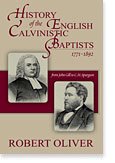
Continuity and Change is the title of Roger Hayden's 2006 book, subtitled "Evangelical Calvinism among eighteenth century Baptist ministers trained at Bristol Academy, 1690-1791. It is based on his 1991 PhD thesis. It is basically a history of Reformed Baptists between Benjamin Keach and William Carey with the focus on the Bristol Academy and the Western Association with Wales, the Midlands, London and the later Northampton Association in the background. Part of the argument is that London was not taking the lead at this time but Bristol and similar provincial cities.
The book is in three parts. First, we look at the rise of Evangelical Calvinism in the Baptist Associations (1-60). After giving some background (1-11), he covers the initial history of the western association, up to its re-formation in 1734 with an emphasis on ministerial education and what he calls "London's failure" (12-30). He also summarises the situation with the Welsh, Midland, Northern and Irish Baptist Associations (37-49).
The bulk of the book is on the Bristol Academy (61-178) looking, in turn, at its first three leaders - the pioneer Bernard Foskett (61-104) Hugh Evans (105-120) and the paternalistic Caleb Evans (121-142). This part (142-178) is completed with an interesting section on local church life (142-178) - covenant and baptism, confession and catechism and quite a bit on hymn singing (157-178).
The third section, Calvinist and missionary (179-204), steps back a little and looks at the more familiar story of the presence of hyper-Calvinism among Baptists (Hussey influenced Skepp, Brine, Gill) and its eventual demise (through Edwards influenced Sutcliff and Fuller). one would want to quibble with some of the statements here (about Beza and Perkins for example) but the basic thesis seems sound.
Of four appendices perhaps the most interesting is the list of Bristol students, 1720-1791 (222-249). Benjamin Beddome is among them. Beddome is also mentioned on several other pages as are several of his relatives. The fine bibliography and index add to the value of this well researched and interesting book.
Any thesis however well reworked is not always the most gripping of reads. I was helped to keep going by the relation of one sad but surreal incident and what appears to be one glorious typo (not very many of those here at all).
The sad surrealism - around page 90 the story of John Reynolds who suffered an impaired voice soon after moving to London "having accidentally inhaled his shirt studs while dressing".
The typo - on page 98 we are told that the Trosnant School was founded by "John Griffiths, who was at the time manager of the local iron and trepanning works in Pontypool". Trepanning can refer to creating mine shafts but is most often used to describe brain surgery through the skull. The word should be "japanning".
To get a copy check here.

30/06/2010

Bristol Contemporaries

Roger Hayden's book Continuity and Change includes a list of Bristol students 1720-1791. Beddome was a student for only a relatively short time but his contemporaries seem to have been as follows.
1. Joshua Andrews (1708-1793) A Welshman who later ministered back in Wales. On June 3 1769 there was a collection for him at Bourton (see Church Book) "a poor minister near Abergavenny".
2. John Beasley (fl 1720-1765) Pastor Abingdon (1742-45) Wantage (1745-57)
3. Edward Cooke (fl 1730-1770) Pastor at Pershore
4. Caleb Evans (?-1778) A lesser known Caleb. Half brother to Hugh Evans. He became a school master back in Wales.
5. David Evans (?-1786) Welsh. He supplied the Bourton pulpit before Beddome. He went on to Hook Norton (1739-48) Great Gransden, Huntingdonshire (1749-1751) and Biggleswade.
6. Evan Jenkins (1712-1752) Welsh. Various pastorates
7. John Poynting (1719-1791) Followed his father Isaac in Worcester 1741-1791
8. Joseph Stennett (1717-1769) Son of Dr Joseph, brother of Samuel, all pastors. After working with his father he was pastor at Coate, Oxfordshire, 1742-1769
9. Benjamin Vaughan (d 1789) Welsh. Became a Sandemanian.
10. Isaac Woodman (1715-1777) The one baptised in Broadmead, 1735. Pastor in Warwick and Leicester
We may also note that Thomas Flower Jr (1706-1767) son of the Bourton minister prior to Beddome (Thomas Flower Sen died in 1740) was in Bristol just before Beddome. He was at Horsley for 4 or 5 years before becoming pastor in London for eight years but then switching to the corn trade, which earned him the sobriquet "Worldly-minded Flower".
So five Welshmen, one local man, a Londoner and three others. Beddome was in his early twenties as was Stennett. Woodman was slightly older, Poynting slightly younger. Andrews and Jenkins were a few years older. With Beasley, Cooke, Vaughan and the two Evans's we cannot be sure.

29/06/2010

Acknowledgement and hymns

Among the items found in Bristol are a note that reads as follows

Dec 26 1758
Acknowledge the receipt of two
Book (viz:) of Benjamin Beddome
Anti: his of Rome}
Family Instructor}
Mary Bright
Mary was Beddome's sister. Mr Bright was her second husband.
On the reverse of this paper are five hymns not known from elsewhere
Earth's vanities farewell
How greatly honourable Israel was
Nor dark nor clear nor Night nor Day
How excellent thy drawings are
I'm tired of living here below
The book references appear to be to Antiquities of Rome by Basil Kennett first published in 1690 and Daniel Defoe's enormously popular Family Instructor first published in 1715.

Sources - what's where

I have now been able to visit both the Angus Library, Oxford, and the Bristol Baptist College Library, where most of the primary source materials for Beddome are housed. Both have printed copies of his catechism.
The main things the Angus Library has are
1. Beddome's printed sermons in several volumes
2. The relevant Bourton on the Water Baptist Church books
3. A copy of Beddome's will (and perhaps the will itself)
4. A letter from Beddome to Richard Hall
5. Beddome's Library of 600 or more volumes
6. Manuscript hymns
7. Notes to an unpublished sermon
8. Memorabilia belonging to and compiled by grandson Samuel Beddome in an informative notebook
9. Letters by Beddome (?)
10. A copy of his son Benjamin's thesis in Latin
11. Minutes of the Midland Association for the appropriate period
 
In Bristol the main things are
1. A letter from Beddome's parents when he was studying in London
2. Three volumes of manuscript hymns plus some others loose
3. Three books of lecture notes donated to the library by him in 1794
4. A family tree
Bristol also has two letters to John Beddome and Bernard Foskett and what looks to be a fascinating 1755-1790 diary by Mary Jackson nee Ludlow (1738-1807) a member of John Beddome's congregation in Bristol.
A copy of Brooks' history of the Bourton Church can be found in the Dr Williams Library here in London. This is also now available online through Google Books.
At the Gloucestershire Record Office transcripts of four diaries of William Snooke can be found with several references to Beddome.
There are also some few letters by Beddome in the National Library of Wales Mann collection.

Bristol Baptist College


I made me a long promised trip to Bristol Baptist College yesterday. I set out nice and early in the sunshine and headed along the familiar route west. My grandmother (nee Hazleton) was born in Bristol and I still have relatives there but I don't know the city at all and have rarely been there. My AA directions were fine and I found the way across to the college easily enough. It is in leafy Clifton near Clifton College. This is not the building that I visited as a teenager on a "Greek class outing" to see the Tyndale Testament. The Bible was sold to the British Library (1994) and they are now in premises new to them. Not an over large building, it has lecture rooms, offices, library, chapel, etc, but no accommodation (I think). The students are down now but some youth ministry students were still around.
The purpose of my visit was to consult the Benjamin Beddome materials they have (see my Beddome blog for more on that). The librarian Shirley Shire was very helpful. It was good too to meet honorary archivist Roger Hayden, author of several items on Baptist history including his book Continuity and Change: Evangelical Calvinism among 18th century Baptist Ministers trained at Bristol Baptist Academy, 1690-1791. I was glad to meet him and chat a little and buy a signed copy.
I had to pay for the privilege but given what I was getting plus lunch, free parking and what I saved on the postage with the Hayden book I was quids in except for the petrol to get there. I'll probably need to go again but it was good to see what is actually there.